
Rebalancing Strategies During Bull & Bear Crypto Markets
- 25 Dec 2025
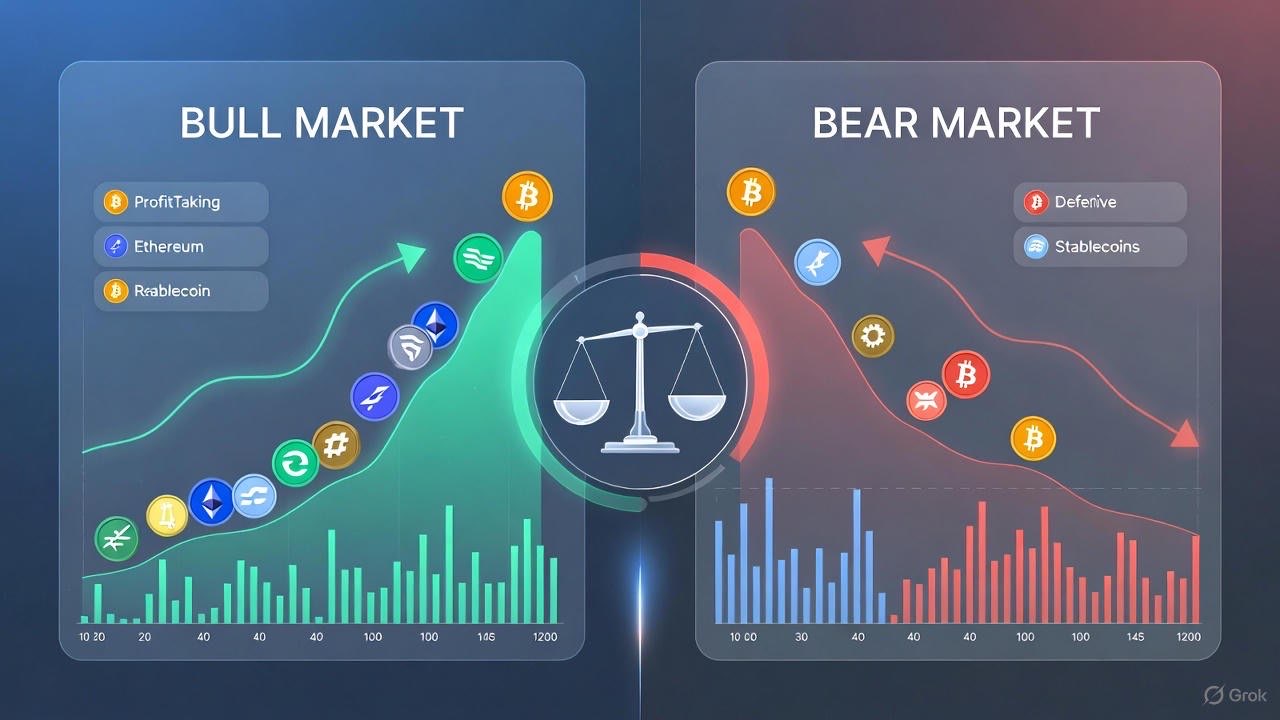
Rebalancing Feels Very Different in Bulls vs Bears — Here’s Why
Let’s start with a situation almost every crypto investor has lived through.
Mike built a solid crypto portfolio early in a bull market. He had a clear allocation, tracked his positions, and even read about rebalancing. Everything looked perfect.
Then prices started ripping.
Bitcoin doubled. Ethereum outperformed. A few altcoins went vertical. Every time Mike checked his portfolio, it was higher than the last time.
He knew he was supposed to rebalance.
But emotionally, it felt insane.
“Why would I sell what’s working?”
So he didn’t.
This is where most investors first learn that rebalancing behaves very differently depending on the market cycle.
Why Market Conditions Matter for Rebalancing
Rebalancing exists to correct allocation drift — but how your portfolio drifts depends on whether markets are rising or falling.
In bull markets:
- Winners expand rapidly
- Risk concentrates quietly
- Portfolios become fragile without looking dangerous
In bear markets:
- High-risk assets shrink faster
- Volatility increases
- Investors freeze or panic
The rules don’t change — but the context does.
If you’re new to rebalancing mechanics, start here: 👉 How to Rebalance a Crypto Portfolio (Simple Step-by-Step Guide)
Rebalancing During Bull Markets (Where Most Mistakes Happen)
Bull markets feel forgiving. Gains hide mistakes.
That’s exactly why rebalancing is hardest — and most important — during these periods.
What Actually Happens in a Bull Market
Assume a simple allocation:
- Bitcoin: 40%
- Ethereum: 30%
- Altcoins: 30%
After a strong rally:
- Bitcoin grows to 45%
- Ethereum to 35%
- Altcoins balloon to 45%
Nothing looks wrong — until volatility hits.
Your portfolio is now far riskier than you intended, even though performance looks incredible.
This is allocation drift in disguise.
Smart Rebalancing Strategies for Bull Markets
1️⃣ Trim Winners Gradually
Bull market rebalancing isn’t about exiting positions — it’s about reducing concentration risk.
You:
- sell a portion of outperformers
- bring weights closer to target
- lock in gains systematically
This reinforces discipline without killing upside.
2️⃣ Rebalance on Strength, Not Fear
The best time to rebalance is:
- after strong rallies
- during euphoric sentiment
- when selling feels emotionally wrong
That discomfort is usually the signal that rebalancing is doing its job.
3️⃣ Don’t Confuse Rebalancing With Chasing
A common bull-market error:
- trimming disciplined positions
- rotating into hype-driven assets
- calling it “optimization”
True rebalancing follows your original allocation logic, not Twitter trends.
If allocation fundamentals aren’t clear yet: 👉 Crypto Portfolio Allocation for Beginners
Bear Markets Change Everything
When the market turned, Mike froze.
Prices dropped 20%. Then 40%. Then more.
He stopped rebalancing entirely.
“What’s the point? Everything is down.”
This is where rebalancing shifts from growth optimization to capital preservation.
What Happens to Portfolios in Bear Markets
Bear markets exaggerate risk:
- Volatile assets collapse faster
- Defensive assets shrink less
- Emotional decision-making increases
Ironically, not rebalancing can increase risk, even as portfolio value falls.
This is where risk management matters more than performance: 👉 Crypto Portfolio Risk Management Explained
Smart Rebalancing Strategies for Bear Markets
1️⃣ Reduce Risk — Don’t Chase Recovery
Bear market rebalancing focuses on:
- reducing exposure to extreme volatility
- increasing relative stability
- keeping capital intact
It’s not about timing the bottom — it’s about surviving to the next cycle.
2️⃣ Use Rules, Not Hope
Hope-driven behavior looks like:
- refusing to cut exposure
- waiting for “one more bounce”
- abandoning structure
Rule-based rebalancing removes emotion from decisions when emotions are strongest.
3️⃣ Let Volatility Guide Adjustments
High volatility:
- drains psychological capital
- forces bad trades
- delays recovery
Reducing exposure to high-volatility assets improves survivability.
This pairs well with: 👉 Volatility-Adjusted Portfolio Allocation
A Tale of Two Investors in the Same Market
Mike and Sarah entered the same bear market.
Mike
- stopped rebalancing
- held everything
- capitulated near the bottom
Sarah
- reduced exposure gradually
- rebalanced defensively
- preserved capital
- had liquidity when conditions stabilized
Same market.
Different outcomes.
Bull vs Bear Rebalancing (Simple Comparison)
Bull Markets
- Goal: control risk
- Action: trim winners
- Enemy: greed
Bear Markets
- Goal: survive
- Action: reduce volatility
- Enemy: panic
Rebalancing doesn’t predict cycles — it adapts to them.
Why Most Investors Learn This the Hard Way
Rebalancing during bulls feels like self-sabotage.
Rebalancing during bears feels pointless.
That’s why most investors skip both — and pay for it later.
Mike eventually changed one rule:
“I rebalance more aggressively when I feel the most emotional.”
That single rule saved his next cycle.
Final Thoughts
Bull markets reward discipline.
Bear markets punish its absence.
Rebalancing isn’t about maximizing upside — it’s about avoiding fatal mistakes.
If you can rebalance through both euphoria and despair, you gain an edge most crypto investors never develop:
staying in the game long enough to win.
Stay in the loop →
Powered by EverRank, and created by GalaxyBuilt
Get Weekly DeFi Alpha in Your Inbox
Weekly DeFi Alpha
56k+ traders getting my private newsletter every week
Join To Download our Ebook Free
Read Next_

Advanced Risk Management: Stop-Losses, Drawdowns, Hedging & Real Risk Control
A complete, human-friendly guide to managing crypto portfolio risk using stop-losses, drawdown control, hedging, correlation awareness, and professional risk metrics.

Algorithmic Portfolio Rebalancing for Crypto
Learn how to automate crypto portfolio rebalancing with algorithmic strategies, reducing manual effort while maintaining target allocations.

Advanced Crypto Estate Planning: Protecting Your Digital Legacy
Learn how to protect and transfer crypto assets through estate planning, including wills, trusts, multi-generational strategies, and best practices.