-
 Nefu
Nefu - 03 Dec 2025
- Trading investing
The Top 8 DEXs for Lowest Trading Fees and Highest Yield Rewards Right Now
The Top 8 DEXs for Lowest Trading Fees and Highest Yield Rewards Right Now Decentralized exchanges (DEXs) have fundamentally transformed how we trade and earn in the cryptocurrency ecosystem. Unlike their centralized counterparts, DEXs operate without intermediaries, giving users complete control over their assets while offering unprecedented opportunities for passive income through yield farming and liquidity provision. As we navigate the 2025-2026 bull market, selecting the right DEX can mean the difference between modest returns and explosive gains. However, with hundreds of platforms across multiple blockchains, finding the optimal balance between low trading fees, high yield farming rewards, and robust security can be overwhelming for both beginners and experienced traders. This comprehensive guide analyzes the 8 leading DEXs that currently offer the best combination of cost efficiency, lucrative passive income opportunities, and sustainable growth potential. We'll dive deep into their unique mechanics, fee structures, yield opportunities, and strategic advantages to help you maximize your DeFi earnings while minimizing costs. Understanding the DEX Landscape: Beyond Simple Swaps Before we explore individual platforms, it's crucial to understand why DEXs matter in today's crypto ecosystem. DEXs are more than just trading venues—they're the foundation of decentralized finance (DeFi), enabling:Permissionless Trading: Anyone with a compatible wallet can trade without KYC requirements Liquidity Provision: Users can earn passive income by supplying assets to liquidity pools Yield Farming: Advanced strategies that combine multiple DeFi protocols for optimized returns Cross-Chain Interoperability: Many DEXs now support multiple blockchains, expanding your earning potentialFor beginners looking to understand DeFi fundamentals, our guide on What is DeFi? A Simple Beginner's Guide to Decentralized Finance provides essential context before diving into DEX strategies. Key Metrics for Evaluating DEXs When assessing DEXs, consider these critical factors:Trading Fees: The percentage charged per swap (typically 0.01% to 1%) Gas Costs: Network fees for executing transactions APR/APY: Annual percentage rates for yield farming and liquidity provision Total Value Locked (TVL): Amount of assets secured in the protocol Security Audits: Third-party verification of smart contract safety Tokenomics: Utility and value accrual mechanisms of native tokensUnderstanding these metrics is essential for making informed decisions in the DeFi space. For those new to tracking their investments, our guide on How to Track Your Crypto Portfolio as a Beginner offers practical strategies for monitoring your DEX earnings.🥇 1. PancakeSwap: The BNB Chain Powerhouse Why It Dominates the BNB Ecosystem PancakeSwap has evolved from a simple Uniswap fork to become the undisputed leader on the BNB Chain, offering an unparalleled combination of low fees, high rewards, and a comprehensive DeFi ecosystem.Feature Details Strategic AdvantageTrading Fees 0.20% to 0.25% per swap Extremely cost-effective for high-frequency trading and arbitrageYield Farming APY 15-300%+ depending on pool and token Some of the most competitive returns in DeFi, especially for CAKE pairsNative Token (CAKE) Deflationary mechanics with burning Reduced supply pressure creates potential for price appreciationAdditional Features IFOs, Lottery, Prediction Markets, NFTs Comprehensive ecosystem reduces need to exit platformAdvanced Strategies for Maximizing ReturnsConcentrated Liquidity V3: New feature allows liquidity providers to set custom price ranges, potentially increasing returns by 10x compared to traditional AMMs CAKE Staking: Lock CAKE to earn veCAKE, boosting farming rewards and participating in governance Syrup Pools: Simple staking with minimal impermanent loss risk, ideal for beginnersBest For: Traders and farmers seeking the best combination of low fees and high yields on BNB Chain, especially those comfortable with more complex farming strategies.🔄 2. Curve Finance: The Stablecoin Specialist Revolutionizing Stablecoin Efficiency Curve Finance has perfected the art of stablecoin trading with its unique Automated Market Maker (AMM) design that minimizes slippage and maximizes capital efficiency for pegged assets.Feature Details Strategic AdvantageTrading Fees As low as 0.04% for stablecoin pools Unbeatable for large stablecoin transactionsCRV Emissions 5-20%+ APY on top of trading fees veCRV lockers can earn substantial protocol feesImpermanent Loss Protection Optimized for similar assets Minimal IL for stablecoin pairsVote-Escrow Model Lock CRV for veCRV governance rights Earn trading fees, bribes, and boosted rewardsThe veCRV Advantage: Understanding Curve's Flywheel Curve's unique tokenomics create a powerful ecosystem:Lock CRV → Receive veCRV (vote-escrowed) Vote on pools → Earn trading fees and CRV emissions Receive bribes → Protocols pay veCRV holders to direct emissions Boost rewards → Up to 2.5x multiplier on your liquidityThis creates what many call "the Curve Wars"—where protocols compete to attract CRV votes for their liquidity pools. Best For: Large stablecoin holders, institutional players, and sophisticated yield farmers looking to minimize risk while maximizing returns on pegged assets.🦄 3. Uniswap: The DeFi Standard Bearer Why Uniswap Remains Essential As the original AMM innovator, Uniswap continues to set the standard with its V3 concentrated liquidity model and upcoming V4 enhancements. While fees can be higher on Ethereum mainnet, its Layer 2 deployments offer competitive alternatives.Feature Details Strategic AdvantageFee Tiers 0.01%, 0.05%, 0.30%, 1.00% Customizable based on pair volatilityConcentrated Liquidity Capital efficiency up to 4000x Higher fees earned per dollar depositedMulti-Chain Presence Ethereum, Arbitrum, Optimism, Polygon, Base Flexibility across ecosystemsUNI Staking (Coming soon in V4) Protocol fee sharing for token holdersUniswap V4: The Next Evolution With V4's introduction of "hooks"—customizable smart contracts that execute before or after swaps—Uniswap is poised to unlock:Dynamic Fees: Fees that adjust based on market conditions TWAP Oracles: Improved price feeds for derivatives Limit Orders: Native DEX limit order functionality Auto-Compounding: Automatic reinvestment of earned feesBest For: Ethereum maximalists, large liquidity providers comfortable with concentrated liquidity strategies, and traders needing maximum depth for major pairs.⚡ 4. Raydium: Solana's Speed Demon Capitalizing on Solana's Infrastructure Raydium leverages Solana's sub-second finality and negligible transaction costs to offer what many consider the fastest and cheapest DEX experience in crypto.Feature Details Strategic AdvantageTrading Fees 0.25% with portion to order book Combines AMM liquidity with order book depthTransaction Speed 400ms average confirmation Near-instant trade executionGas Costs $0.0001-$0.001 per transaction Enables micro-trading strategiesAcceleRaytor Launchpad for new Solana projects Early access to promising tokensThe Order Book + AMM Hybrid Advantage Unlike pure AMMs, Raydium's hybrid model:Provides Liquidity to Serum's central limit order book Aggregates Prices across both AMM and order book Reduces Slippage for larger trades Enables Advanced Order Types including limit and stop ordersThis makes Raydium particularly attractive for traders accustomed to centralized exchange features but wanting to maintain self-custody. Best For: Active traders, arbitrageurs, and anyone prioritizing speed and low costs above all else, especially within the Solana ecosystem.📈 5. dYdX: The Professional Trading Platform When You Need More Than Spot Trading While most DEXs focus on spot markets, dYdX has carved its niche in decentralized derivatives, offering perpetual contracts with up to 20x leverage on its own Layer 1 blockchain.Feature Details Strategic AdvantageFee Structure Maker: -0.025% to 0.05% (rebates to negative) Negative fees mean you get paid to provide liquidityLeverage Up to 20x on major pairs Significant capital efficiencyOrder Types Market, limit, stop-loss, take-profit Professional-grade trading interfaceDYDX Staking Earn protocol fees and governance rights Revenue sharing modelUnderstanding dYdX's Fee Advantages dYdX's unique fee structure creates compelling opportunities:Volume-Based Tiers: Higher volume = lower fees (as low as 0.02% for takers) Maker Rebates: Up to 0.025% rebate for adding liquidity No Gas Fees: Built on its own chain with subsidized transactions Trading Rewards: Additional token incentives for active tradersBest For: Experienced traders, institutions, and anyone needing leverage, advanced order types, or derivatives exposure in a non-custodial environment.🏆 6. Aerodrome / Velodrome: The ve(3,3) Innovators The Next Generation of Liquidity Incentives Operating on Base (Aerodrome) and Optimism (Velodrome), these sister protocols have perfected the "vote-escrow" model popularized by Curve, creating what many consider the most sophisticated liquidity incentive mechanisms in DeFi.Feature Details Strategic AdvantageTrading Fees 0.02-0.05% on most pools Among the lowest in DeFiBribe Ecosystem 20-100%+ APY from external protocols Additional yield on top of trading feesve-token Model Lock AERO/VELO for voting rights Control emissions and earn protocol feesLayer 2 Benefits Ethereum security with minimal costs Best of both worldsThe Bribe Economy: A New Paradigm The ve(3,3) model creates a unique economic dynamic:Protocols Need Liquidity → They offer "bribes" (token rewards) ve-token Holders Vote → They direct emissions to highest-bribed pools LPs Earn Multiple Streams → Trading fees + emissions + bribes Flywheel Effect → More TVL → more fees → more bribes → more TVLThis has created what some call "the Bribe Wars," where protocols compete aggressively for liquidity through increasingly attractive bribe offerings. Best For: Sophisticated yield farmers comfortable with vote-escrow mechanics, those seeking exposure to Base/Optimism ecosystems, and anyone wanting to participate in cutting-edge DeFi economics.🎯 7. 1inch: The Aggregator That Beats Them All Why Route When You Can Aggregate? 1inch isn't a traditional DEX—it's a DEX aggregator that splits orders across multiple sources to guarantee the best possible price. For large trades or complex routes, nothing beats its optimization algorithms.Feature Details Strategic AdvantageEffective Fees 0% (only pays underlying DEX fees) Always finds the cheapest routeGas Optimization 20-50% gas savings vs direct swaps Multiple optimization algorithmsLiquidity Sources 100+ DEXs across 10+ chains Maximum depth and minimal slippageFusion Mode Limit orders with MEV protection Professional trading featuresAdvanced 1inch StrategiesLarge Order Splitting: For trades over $50k, 1inch can save thousands in slippage Cross-Chain Swaps: Native support for bridging between chains during swaps Fusion Orders: Place limit orders that execute only when conditions are met, with MEV protection 1INCH Staking: Earn protocol fees and governance rightsBest For: Everyone making trades over $1,000, institutions, arbitrage bots, and anyone who wants to guarantee they're getting the best price available across all DEXs.🍣 8. SushiSwap: The Multi-Chain Veteran Consistency Across Ecosystems While newer DEXs have captured headlines, SushiSwap's consistent multi-chain presence and continuous innovation make it a reliable choice across numerous ecosystems.Feature Details Strategic AdvantageTrading Fees 0.25-0.30% standard across chains Predictable and competitivexSUSHI Staking Earn 0.05% of all trading fees Protocol revenue sharingTrident AMM Multiple pool types (constant product, stable, concentrated) Flexibility for different assetsBentoBox Yield-bearing vault for idle assets Additional yield on deposited tokensThe Sushi Ecosystem Advantage Sushi's strength lies in its comprehensive offering:Swap: Basic token exchanges BentoBox: Lending and leveraged yield farming Kashi: Isolated lending markets MISO: Token launchpad Onsen: Incentivized farming poolsThis integrated approach means users can access multiple DeFi services without leaving the platform or paying additional gas for contract approvals. Best For: Users who trade across multiple chains and want a consistent interface, those who value Sushi's long track record, and anyone participating in Sushi's broader ecosystem of services.⚠️ Critical Risk Factors and Mitigation Strategies Understanding DeFi Risks Before Committing Capital While DEXs offer attractive returns, they come with significant risks that every user must understand:Smart Contract Risk: Even audited contracts can have vulnerabilitiesMitigation: Start with small amounts, use established protocols with long track recordsImpermanent Loss (IL): Occurs when pool assets diverge in priceMitigation: Choose stablecoin pairs, use concentrated liquidity to manage rangesProtocol Risk: Governance attacks, treasury mismanagementMitigation: Research team backgrounds, monitor governance proposalsOracle Manipulation: Price feed attacks can drain liquidityMitigation: Prefer protocols with robust oracle systems like ChainlinkFor a deeper understanding of security considerations, see our guide on Crypto Scams Explained: How Beginners Actually Get Wiped. Tax Implications of DEX Activity Every swap, yield farm harvest, and liquidity provision event can create taxable consequences:Swaps: Capital gains/losses on each token pair LP Rewards: Ordinary income at time of receipt Trading Fees: Ordinary income when earnedProper tracking is essential. Consider using tools mentioned in our portfolio tracking guide and consult our crypto tax overview. 🎯 Strategic Allocation Framework How to Diversify Across DEXs Based on your goals and risk tolerance, consider these allocation strategies: For Conservative Investors (Low Risk)40% Curve Finance: Stablecoin pools with minimal IL 30% PancakeSwap: BNB Chain blue-chip pairs 20% Uniswap V3: Concentrated liquidity on major ETH pairs 10% 1inch: For occasional swaps at best pricesFor Aggressive Yield Farmers (High Risk)30% Aerodrome/Velodrome: High-bribe pools on L2s 25% PancakeSwap: High-APR CAKE farms 20% Raydium: Solana ecosystem opportunities 15% SushiSwap: Multi-chain Onsen pools 10% dYdX: Trading fee rebates and stakingFor Active TradersPrimary: 1inch for all swaps (best execution) Liquidity Provision: Uniswap V3 concentrated ranges Yield Farming: PancakeSwap for BNB Chain, Aerodrome for L2s🔮 The Future of DEXs: Trends to Watch What's Coming Next in Decentralized TradingIntent-Based Trading: Systems like CowSwap and UniswapX that let users specify what they want (e.g., "best ETH price within 5 minutes") rather than how to executeAI-Powered Optimization: Machine learning algorithms predicting optimal swap routes and liquidity provision strategiesInstitutional-Grade Features: KYC-compliant pools, regulatory-friendly interfaces, and improved settlement finalityCross-Chain Native DEXs: Platforms that natively support swaps across multiple chains without bridgesDeFi Derivatives Expansion: More sophisticated derivatives products following dYdX's success🚀 Getting Started: Your Action Plan Step-by-Step ImplementationEducation First: Understand the risks and mechanics of each DEX Start Small: Begin with $100-500 to learn each platform's interface Secure Your Assets: Use hardware wallets and follow wallet security best practices Track Everything: Implement portfolio tracking from day one Diversify Gradually: Spread across 2-3 DEXs based on your strategy Stay Informed: Monitor protocol updates, security incidents, and market changesRecommended Learning Path For complete beginners:Start with understanding DeFi basics Set up a secure wallet using our wallet setup guide Begin with PancakeSwap or Uniswap on a Layer 2 Progress to more advanced platforms as you gain confidence📊 Performance Benchmarks and Real Returns Based on Q4 2025 data, here are realistic return expectations:DEX Conservative APY Aggressive APY Risk LevelCurve (stable pools) 4-8% 15-25% (with bribes) LowPancakeSwap (major pairs) 8-15% 30-60% (CAKE farms) MediumUniswap V3 (concentrated) 10-20% 40-100%+ Medium-HighAerodrome (ve-token) 12-25% 50-150%+ HighRaydium (SOL pairs) 15-30% 60-200%+ HighNote: These are historical averages and not guarantees of future performance. 💎 Final Recommendations Based on User ProfilesAbsolute Beginners: Start with PancakeSwap on BNB Chain—low fees, good documentation, and forgiving learning curve Stablecoin Heavy Portfolios: Curve Finance is non-negotiable for its efficiency and IL protection Multi-Chain Users: SushiSwap offers consistency across ecosystems Active Traders: 1inch for swaps, dYdX for leverage, Uniswap V3 for liquidity provision Yield Maximizers: Aerodrome/Velodrome for the most sophisticated incentive structures Solana Enthusiasts: Raydium for speed and low costsThe Golden Rule: Never Stop Learning The DEX landscape evolves weekly. Successful participants:Continuously educate themselves on new protocols and strategies Monitor security developments across all platforms they use Adjust allocations based on changing market conditions Participate in governance to protect their investments Maintain security hygiene with regular wallet audits and approval revocations📚 Further Resources To deepen your DEX knowledge:What is DeFi? A Simple Beginner's Guide How to Track Your Crypto Portfolio Crypto Scams Explained Cold vs Hot Wallets Security Guide Crypto Taxes OverviewDisclaimer: The decentralized finance (DeFi) space is highly dynamic and carries substantial risk. Reward APYs/APRs fluctuate based on market conditions, token prices, and protocol updates. This article is for educational purposes only and not financial advice. Always:Conduct your own research (DYOR) Start with small amounts Understand all risks before committing capital Consult with financial and tax professionals Never invest more than you can afford to loseThe DEXs mentioned have varying track records and risk profiles. Past performance does not guarantee future results. Security in DeFi is paramount—use hardware wallets, revoke unnecessary approvals regularly, and stay informed about protocol updates and potential vulnerabilities.

- Nefu
- 03 Dec 2025
- Getting started
How to Set Up Phantom Wallet: Complete Step-by-Step Guide for Solana & Ethereum
Your keys, your crypto. Learn how to securely set up and use Phantom Wallet—the most popular wallet for Solana and Ethereum. Already have a wallet and just looking for the best places to buy crypto? Check out our guide to the top crypto exchanges or our ultimate guide to buying cryptocurrency. Introduction Phantom is more than just a wallet—it's your gateway to the Solana and Ethereum ecosystems. With over 3 million users, Phantom combines simplicity with powerful features, making it perfect for beginners while still offering everything advanced users need. Why Choose Phantom?✅ Multi-Chain Support: Handles both Solana (SOL) and Ethereum (ETH) networks in one interface. ✅ Built-in Swapping: Trade tokens directly in the wallet—no need for separate DEX sites. ✅ NFT Gallery: Easily view, manage, and send your digital collectibles. ✅ Security-First: Open-source code that's been audited for safety. ✅ Cross-Platform: Available as a browser extension and mobile app (iOS & Android).What You'll Learn:How to install and set up Phantom securely. How to receive, send, and swap cryptocurrency. How to manage NFTs and connect to decentralized apps (dApps). Essential security practices to protect your assets. How to troubleshoot common issues.Part 1: Installation & Initial Setup Step 1: Download Phantom (Official Sources Only) ⚠️ CRITICAL WARNING: Only download Phantom from official sources. Scammers create fake wallet sites to steal your funds. Official Download Links:Chrome/Brave/Edge/Arc: phantom.app/download Firefox: Mozilla Add-ons Store iOS: App Store Android: Google Play StoreFor this guide, we'll use the browser extension (the most common method). Step 2: Create Your New WalletClick "Add to Chrome" (or your browser's equivalent). Pin the Phantom extension to your toolbar for easy access. Click the Phantom icon that appears in your browser's toolbar. Select "Create New Wallet."Step 3: The MOST IMPORTANT STEP: Your Secret Recovery Phrase ⚠️ READ THIS CAREFULLY BEFORE CONTINUING: Your Secret Recovery Phrase (also called a seed phrase) is the only way to recover your wallet. If you lose it, you lose access to your funds forever. No one can help you recover it—not Phantom support, not any company. What you'll see:12 random words in a specific order. Example: crystal robot blanket tomato gym abandon clever focus reason velvet successSecurity Protocol:Write it down on paper (not digitally—no photos, no screenshots, no text files). Store multiple copies in different, secure physical locations (e.g., safe, lockbox). Never share it with anyone. Phantom will NEVER ask for it. Consider a metal backup plate (like CryptoSteel) for fire/water protection.Complete the verification:Click "I've saved it somewhere safe." Enter the words in the correct order when prompted. Create a strong, unique password for the wallet itself (this is different from your recovery phrase!).✅ Congratulations! Your wallet is created. You'll see your dashboard with a $0 balance. Part 2: Understanding Your Phantom Wallet Interface Let's tour the main sections: Dashboard (Main View)Top Bar: Network selector (Solana vs. Ethereum). Balance: Total portfolio value in USD. Assets Tab: List of all your tokens (SOL, ETH, USDC, etc.). Collectibles Tab: Your NFTs displayed visually. Bottom Navigation Bar: 🏠 Home 🔄 Swap 📤 Send ⚙️ SettingsYour Public Wallet AddressClick your profile picture → "Copy Address" or click the address itself. Solana addresses look like: 7g5L...F4t3 (shorter, base-58 format). Ethereum addresses look like: 0x742d...a9c8 (longer, starts with 0x).This is your public address—you can share it safely to receive funds. Part 3: Funding Your Wallet Option A: Receive from an Exchange (Most Common & Cost-Effective)Copy your Phantom address: Make sure you're on the correct network tab (Solana for SOL, Ethereum for ETH) and copy your address. Go to your exchange (Coinbase, Binance, Kraken, etc.): Navigate to "Withdraw" or "Send." Paste your Phantom address. CRITICAL: Select the correct network: For SOL: Choose "Solana (SOL)" network. For ETH/USDC: Choose "Ethereum (ERC-20)" network.Enter the amount and confirm (always do a small test first).Wait for confirmation: Solana: ~5-10 seconds. Ethereum: ~1-5 minutes (can vary with congestion).Option B: Buy Directly in Phantom (US Only, Higher Fees) Phantom partners with MoonPay and Coinbase Pay for direct purchases:Click the "Buy" button in the main interface. Select your preferred provider. Enter the amount and complete payment details and any KYC (Know Your Customer) steps. Funds typically arrive within 1-30 minutes.Note: Direct purchase fees are generally higher than buying on an exchange first. Option C: Receive from Another Wallet Simply share your public address (the one you copied earlier) with the sender. No additional steps are needed on your end. Part 4: Essential Operations How to Send CryptocurrencyClick the "Send" button in the bottom navigation. Paste the recipient's address (double-check for accuracy!). Select the token (SOL, ETH, USDC, etc.). Enter the amount. Preview the transaction details (amount, network fee, total). Click "Send" and confirm.Pro Tip: Always send a small test transaction first when sending to a new address for the first time. How to Swap Tokens (Using the Built-in DEX) Swap tokens without leaving your wallet:Click the "Swap" tab. Select tokens: "You pay" (what you're swapping from) and "You receive" (what you're swapping to). Enter the amount. Review the quote: Exchange rate Price impact (lower is better for large swaps) Network feeClick "Swap" and confirm.Supports swaps on both Solana and Ethereum networks. Part 5: Advanced Features Managing Multiple Networks & Custom TokensSwitch Networks: Click the network selector in the top left. Add Custom Tokens: Go to Settings → "Token List" → "Add Custom Token." Paste the token's contract address (find it on Solscan or Etherscan).NFT ManagementView Collection: Click the "Collectibles" tab. Send an NFT: Click on any NFT → "Send." View Details: Click any NFT to see properties, collection info, and marketplace links.Connecting to dApps (Decentralized Applications)Visit a Solana or Ethereum dApp (e.g., Jupiter, Magic Eden, Uniswap). Click "Connect Wallet" on the dApp. Select "Phantom" from the list. Approve the connection request in the Phantom pop-up. Always review permissions: You can manage connected sites in Settings → "Trusted Apps."Part 6: Critical Security Guide Security Best PracticesRecovery Phrase Protection: Paper copies stored in fireproof/waterproof containers. Never stored digitally. Consider steel backup plates.Wallet & Device Security: Use a unique, strong password for your wallet. Keep your computer and phone free of malware. Use a password manager.Transaction Safety: Always verify recipient addresses (especially the first and last few characters). Use the "Copy Address" function instead of typing. Test with small amounts first.dApp & Connection Hygiene: Regularly review and revoke unused dApp connections (Settings → Trusted Apps). Only connect to reputable dApps. Double-check URLs.Common Scams & How to Avoid Them❌ Fake Support: No legitimate support will ever ask for your recovery phrase or private keys. ❌ Fake Airdrops: If it seems too good to be true, it is. Don't interact with unexpected tokens/NFTs. ❌ Malicious dApps: Check URLs carefully. Look for community verification and official links. ❌ Address Poisoning: Scammers send $0 transactions from addresses similar to yours, hoping you'll copy theirs by mistake. Always verify the full address.Golden Rule: When in doubt, pause and verify. It's better to miss an opportunity than to lose your funds permanently. Part 7: Troubleshooting "Transaction Failed" ErrorsInsufficient funds for gas: Ensure you have enough SOL/ETH in your wallet to cover network fees. Slippage too low: When swapping volatile tokens, increase your slippage tolerance in the swap settings (start with 1%). Network congestion: (Mostly for Ethereum). Wait and try again later, or adjust your gas fee if the wallet allows."Cannot Read Balance" or Sync IssuesCheck your internet connection. Switch networks (Solana ↔ Ethereum) and switch back. Clear the wallet cache: Settings → "Privacy & Security" → "Clear Cache." As a last resort, reinstall the extension (you can restore with your recovery phrase).How to Restore Your Wallet (Lost Access)On a new install, click "I already have a wallet." Enter your 12-word recovery phrase in the exact order. Set a new password. Warning: Only perform restoration on a trusted, malware-free device.Part 8: Next Steps & Resources Recommended Learning PathMaster the Basics: You've done it with this guide! Earn Yield: Learn about Solana staking directly in Phantom to earn ~5-8% APY on your SOL. Explore DeFi: Try decentralized trading on Jupiter (Solana) or Uniswap (Ethereum). Dive into NFTs: Explore marketplaces like Magic Eden or Tensor. Bridge Assets: Move assets between chains using Wormhole or Portal.Essential Tools & ResourcesBlock Explorers: View any transaction. Solana: Solscan.io Ethereum: Etherscan.ioPortfolio Trackers: Step Finance (Solana-focused) Debank (Multi-chain)Security Tools: Revoke Cash: To review and revoke token spending permissions. Wallet Guard: Browser extension for scam detection.Frequently Asked Questions (FAQ) Q: Is Phantom Wallet free? A: Yes, Phantom is completely free to download and use. You only pay blockchain network fees (gas) for transactions. Q: Can I use Phantom on multiple devices? A: Yes! Install Phantom on another device and select "I already have a wallet." Use your recovery phrase to restore. Your wallet will sync across devices. Q: What happens if the Phantom company disappears? A: Your funds are safe on the blockchain. You can use your secret recovery phrase to restore your wallet in any other compatible wallet (e.g., Solflare, Backpack for Solana; MetaMask for Ethereum). Q: Can I stake SOL directly in Phantom? A: Yes! Click on your SOL balance → "Stake" → choose a validator. Consider supporting smaller, non-top-10 validators to help decentralize the network. Q: How do I update Phantom? A: Browser extensions usually update automatically. For manual checks, go to chrome://extensions/, enable "Developer mode," and click "Update." Q: Is Phantom better than MetaMask? A: For Solana, Phantom is the dominant, feature-rich choice. For Ethereum, it offers a cleaner, more user-friendly interface comparable to MetaMask. Many users run both wallets. Final Security Checklist Recovery phrase written on paper (multiple copies stored securely). Recovery phrase NEVER stored digitally. Strong, unique password set for wallet access. Official Phantom website bookmarked. Test transaction completed to verify setup. Connected dApps reviewed regularly. Device is free of malware/viruses. I know how to restore my wallet if needed.Need Help? Official Resources:Support Center: help.phantom.app Official Twitter: @phantom (Beware of impersonators!) Discord: phantom.app/discordCommunity Help:Reddit: r/phantomwallet Solana Discord: #phantom-support channel⚠️ REMEMBER: Official support will NEVER ask for your recovery phrase, password, or private keys.Tags: phantom wallet, solana wallet, ethereum wallet, crypto wallet setup, seed phrase security, defi wallet, nft wallet, how to use phantomLast Updated: 2025-12-03Reading Time: 10 minutesSkill Level: Beginner to Intermediate Now that your wallet is set up, learn how to put your crypto to work in our Complete Guide to Solana Staking.
- Nefu
- 01 Dec 2025
- Defi yield
The Ultimate Beginner’s Guide to Providing Liquidity on Uniswap V3
The Ultimate Beginner’s Guide to Providing Liquidity on Uniswap V3 If you’ve ever wondered how people actually make money in DeFi beyond just buying and holding tokens, liquidity providing on Uniswap V3 is one of the most powerful and widely used strategies in all of decentralized finance. This guide is built for complete beginners but goes deep enough that even intermediate users will walk away with new insights. Let’s turn you into a confident, profitable liquidity provider.Why Provide Liquidity in the First Place? When you trade on Uniswap, someone has to be on the other side of that trade. That “someone” is the collective liquidity in the pool. By depositing your tokens, you become the market maker and earn a percentage of every single trade that happens in your pool — 24 hours a day, 7 days a week, while you sleep. Uniswap V3 (launched May 2021) completely changed the game with concentrated liquidity. Instead of your capital being spread uselessly from price 0 to infinity (like V2), you now decide exactly which price range your money works in. This can give you 50–4000× more capital efficiency than V2, meaning dramatically higher fee yields — but it also introduces new risks we’ll cover in extreme detail.Core Concepts You Must Understand Before Depositing a Single Dollar 1. Liquidity Pool A smart contract that holds reserves of two tokens (e.g., ETH and USDC) and allows anyone to swap between them using the constant-product formula (or concentrated version in V3). 2. Concentrated Liquidity (The Big Innovation) You choose a custom price interval such as $1,800–$2,800 for ETH/USDC. Your capital only earns fees when the market price is inside that interval. The narrower the range, the more fees you earn per dollar when in-range — but the higher the chance you go out-of-range and earn nothing. 3. Fee Tiers Uniswap V3 offers four tiers per pool:0.01 % → stablecoin & pegged assets 0.05 % → tightly correlated pairs (e.g., stETH/ETH) 0.30 % → standard volatile pairs (ETH/USDC, BTC/ETH) 1.00 % → exotic or extremely volatile pairsHigher fee tier = more fees per trade, but usually lower trading volume. 4. Impermanent Loss (Explained Below in Exhaustive Detail) 5. Total Value Locked (TVL) & Volume Always check DefiLlama or the Uniswap Info page. Higher TVL + high 24h volume = safer and more profitable.Impermanent Loss: The Most Misunderstood Risk in DeFi Impermanent loss (IL) is the difference in value between:Holding the tokens outside the pool, vs Depositing them into the pool and withdrawing later when prices have changedWhy Does It Happen? Uniswap pools must always maintain roughly 50/50 value of both tokens. When the external price of one token rises, arbitrageurs buy the cheaper token from the pool until the ratio rebalances. This forces you to sell the appreciating token at a discount and buy more of the depreciating one — exactly the opposite of what you want. Exact Impermanent Loss Formula (for full-range positions ≈ Uniswap V2/V3 full-range) Real-World Impermanent Loss TablePrice Change (Token A vs Token B) Impermanent Loss±10 % 0.3 %±25 % 0.6 %±50 % 2.0 %±100 % (2×) 5.7 %±300 % (4×) 13.4 %±500 % (6×) 18.5 %±900 % (10×) 25.5 %In concentrated liquidity the story is very different:If price stays inside your range → IL is actually lower than full-range If price leaves your range → you can suffer near-100 % loss of the winning token (minus fees earned)Example Walk-through (Numbers Every Beginner Should Memorize) You deposit $10,000 → $5k ETH + $5k USDC when ETH = $2,000Later ETH pumps to $4,000 (2×) If you had just held→ $5k ETH becomes $10k + $5k USDC = $15,000 → +50 % If you provided full-range liquidity→ Pool forces you to sell half your ETH gains→ You end up with ≈ $14,142 → only +41.42 %→ You suffered 5.7 % impermanent loss vs holding Now imagine you chose a narrow range $1,900–$2,100. When ETH hits $4,000 your position becomes 100 % USDC — you missed the entire rally. That’s the trade-off.Proven Strategies to Minimize or Completely Avoid Impermanent LossStrategy IL Exposure Typical APR Difficulty Best ForStablecoin pairs (USDC/USDT/DAI 0.01 %) Near zero 2–20 % ★☆☆☆☆ Absolute beginners, parking cashstETH/ETH or cbETH/ETH 0.05 % Extremely low 4–25 % ★★☆☆☆ ETH bulls wanting yieldFull-range major pairs (ETH/USDC 0.3 %) Same as V2 8–30 % ★★☆☆☆ Long-term HODLersWide active range (±40–60 % around price) Moderate 20–100 % ★★★☆☆ Balanced approachMedium range (±15–30 %) High when wrong 50–300 %+ ★★★★☆ Experienced, actively monitoredNarrow range market making Very high 100–1000 %+ ★★★★★ Professional LPsSingle-sided liquidity (via vaults) Zero Half fees ★★☆☆☆ Strongly directional viewHedged LP (LP + short/long perps) Can be near zero Fees – funding ★★★★★ Advanced usersMost Popular Beginner Strategies in 2025USDC/USDT 0.01 % on Base or ArbitrumAlmost zero IL, 5–15 % real yield from organic volume, gas < $0.10.Full-range ETH/USDC 0.3 % on Mainnet or ArbitrumIf you planned to hold ETH anyway, you earn 10–40 % extra yield with the same IL as just holding.stETH/ETH 0.05 %You earn staking yield + liquidity fees + tiny IL because the peg rarely breaks.Detailed Step-by-Step Walkthrough (With Screenshots in Mindset)Choose Your Network WiselyEthereum L1 gas is expensive. Start on Arbitrum, Optimism, Base, Polygon, or zkSync Era.Go to app.uniswap.orgClick “Connect Wallet” → MetaMask/Rabbit/WalletConnect.Navigate to Pool tab → “New Position”Select Token PairType or choose (e.g., ETH and USDC). Always double-check contract addresses on volatile tokens.Choose Fee TierUniswap shows recommended tier — follow it unless you have a strong reason not to.Set Your Price Range Beginners: click “Full Range” Intermediate: use the preset buttons (Narrow, Common, Wide) Advanced: manually drag or type exact pricesPro move: look at 90-day price history on DexScreener or Coingecko and set range to cover most of that period.Deposit AmountYou can deposit uneven amounts — Uniswap auto-calculates how much of the second token is needed.Approve TokensFirst transaction approves spending (one-time per token). Second transaction creates the position.Confirm & WaitPosition appears under “Your Positions”.MonitorUse Uniswap Info, DeFiLlama, or tools like Zapper, Zerion, or Apespace to track fees earned.Tools Every Serious Liquidity Provider Uses in 2025Tool PurposeDefiLlama TVL & volume across all poolsinfo.uniswap.org Official analyticsDexScreener Real-time charts & range suggestionsGamma Strategies Auto-rebalancing vaultsArrakis Finance Advanced single-sided concentrated liquidityRevert Finance Visual impermanent loss simulatorTenderly / Etherscan Simulate transactions before sendingReal-World Example: $10,000 Position Walkthrough Let’s say ETH is $3,300 today. You decide on ETH/USDC 0.3 % fee tier, range $2,500–$4,500 (±36 %). You deposit $10k → ~1.52 ETH + ~$5,000 USDC. Over the next 6 months:Pool earns $1,200 in fees Price stays mostly inside your range You suffer only ~2–3 % IL because range was wide → Net return ≈ +9–10 % (much better than just holding)If you had chosen a narrow $3,200–$3,400 range:Fees could have been $4,000+ But if ETH went to $4,200 → you’d be 100 % USDC and missed the rallyChoose your risk level consciously.Advanced Topics Worth KnowingTick spacing: each fee tier has minimum tick distance (prevents spam) Range orders: using concentrated liquidity as a limit order Fee compounding: harvesting reinvesting fees dramatically increases long-term APY Liquidity mining programs: some pools have extra token rewards (check GeckoTerminal)Final Checklist Before You Deposit Have I chosen a high-volume pool?Is my range reasonable for my time horizon?Am I on a low-fee L2?Do I have a plan if price moves 50 %+?Am I comfortable losing some value to IL in exchange for fee income? If yes to all → go for it.Conclusion: Your Path to Becoming a Profitable LP Uniswap V3 turned liquidity providing from a passive, mediocre-yield activity into one of the highest-return strategies in crypto — when done correctly. Start simple: Do your first position in a stablecoin pool on Base or Arbitrum Graduate to full-range ETH/USDC Experiment with wider active ranges Eventually try managed vaults or narrow ranges once you truly understand the mechanicsRemember the golden rule:“The best liquidity providers are the ones whose price range contains the market price for the longest possible time.”Master that, and you’ll be printing fees while everyone else is just hoping for the next 100× meme coin. Now go add some liquidity — the pools need you. Happy yielding!

- Nefu
- 01 Dec 2025
- Infrastructure tech
Genlayer: The "AI Co-Processor" for Blockchains and Your Ticket to the Future of Crypto Work
Genlayer: The "AI Co-Processor" for Blockchains and Your Ticket to the Future of Crypto Work The Problem: Smart Contracts Are Dumb (And That's a Problem) Imagine if your smartphone could only run calculators. No apps for weather, no maps, no social media—just calculators. That’s essentially the state of smart contracts today. Blockchains like Ethereum and Solana are incredible at one thing: deterministic, simple math. They’re perfect for: category: "If Alice sends 1 ETH to Bob, update their balances." category: "If this timestamp passes, release the funds." But they are fundamentally incapable of: category: "Is this news article positive or negative for this company's stock?" category: "Did this athlete's performance in the game qualify as 'exceptional' according to sports analysts?" category: "Is this social media post appropriate for our community guidelines?" This isn't a bug; it's a design feature. For a decentralized network to agree on a result, every single node must arrive at the exact same answer from the exact same inputs. There's no room for interpretation, nuance, or complex reasoning. Blockchains are isolated, blind, and simple by design. Enter the Oracle Problem. Projects like Chainlink solved half of this by bringing simple data (like ETH/USD price) on-chain. But what about questions that require intelligence, not just data? That's where the wall has been—until now. What is Genlayer? Your Blockchain's New Brain Genlayer is a decentralized AI network that acts as a "co-processor" for every blockchain. Think of it this way:The Blockchain is the spine and nervous system—it handles secure, basic execution and movement of value. Traditional Oracles are the senses—they bring in raw data from the outside world. Genlayer is the brain—it provides reasoning, interpretation, and complex thought.When a smart contract needs an intelligent answer, it asks Genlayer. The Genlayer network uses AI models to compute that answer and sends back something revolutionary: a verifiably correct result. The Magic Trick: How zkML Solves the Trust Problem Here's where it gets technically brilliant. How do you trust an AI's answer in a trustless system? Genlayer uses Zero-Knowledge Machine Learning (zkML). Here's the simple version:Request: A smart contract asks, "On a scale of 1-10, how revolutionary is Apple's new AI feature based on tech press reactions?" Compute: A Genlayer node ("Prover") analyzes thousands of articles with an AI model. Prove: Instead of just saying "The answer is 8/10," the node generates a cryptographic proof (a ZK proof). Verify: This tiny proof mathematically guarantees: "I ran the exact, agreed-upon AI model on the correct data and got '8' as the honest result."The blockchain verifies this proof in milliseconds. The result is trustless intelligence. You don't need to trust the node operator; you trust the cryptography. The Future Unlocked: What Can We Actually Build Now? This isn't just theoretical. Genlayer enables applications that were previously science fiction for Web3: Prediction Markets That Predict Everything Platforms like Polymarket and Augur can now host markets on subjective, nuanced events: category: "Will critics consider the next Avatar film a visual masterpiece?" (Analyzing review sentiment) category: "Will the Fed's statement be interpreted as 'hawkish' by Wall Street?" (Analyzing financial media) category: "Which candidate 'won' the debate based on real-time social sentiment?" No more reliance on a single data point or a centralized judge. The crowd's wisdom, processed through verifiable AI, becomes the arbiter. DeFi That Actually Understands Risk Imagine borrowing without over-collateralization. Genlayer enables:On-Chain Credit Scoring: An AI analyzes your wallet's entire history, investment patterns, and repayment behavior to assign a credit score for an under-collateralized loan. Intelligent Portfolio Managers: A DeFi vault that doesn't just follow a simple formula, but uses an AI to dynamically rebalance based on market news, sentiment, and complex indicators.Living, Breathing Digital WorldsDynamic NFTs that evolve their art based on real-world events described by AI. AI NPCs in blockchain games with actual memory, personality, and the ability to have unique, on-chain conversations. Autonomous Virtual Businesses that manage their own in-game economies.Community Moderation at Scale DAOs and social platforms can deploy transparent, customizable AI moderators. The rules (e.g., "flag hate speech") are codified in a smart contract, and the enforcement is handled by a verifiable AI model, eliminating human bias and centralized control. Why This Matters More Than Just Another Protocol Genlayer represents a paradigm shift. We're moving from: Web2 AI: Centralized, opaque, controlled by a few corporations.→ Web3 AI: Decentralized, verifiable, composable, and open. This creates a global market for intelligence. A researcher in Seoul can monetize her specialized Korean sentiment analysis model. A team in Berlin can provide the best sports highlight detection. They all plug into Genlayer and get paid for their AI's work by smart contracts everywhere. This is the infrastructure for Autonomous AI Agents that can own assets, make decisions, and interact with any blockchain. It's the foundation upon which a true on-chain AGI (Artificial General Intelligence) economy could be built. Your Invitation: Get Involved and Earn from the AI Revolution This isn't just something to read about—it's something you can participate in from the ground floor. The Genlayer ecosystem is launching, and projects built on it will need engaged communities. Important: Rally.Fun currently restricts access from certain countries (including the US). To join and complete quests/rewards, you’ll need a reliable VPN. Here’s everything you need: Join the Rally.Fun waitlist with my invite (gives you priority + bonus points):https://waitlist.rally.fun/joinme/NefuTrades Get a fast, audited VPN (use my link for the best deal + extra months free):https://refer-nordvpn.com/emkOgYiYuRS What is Rally.Fun? Rally.Fun is a gamified launch platform where you earn real rewards (tokens, NFTs, whitelist spots, etc.) by testing new crypto projects, completing quests, and giving feedback. Many of the most exciting Genlayer-based apps will launch here first. By joining early with the invite link above (and using a VPN if needed), you position yourself at the very front of the line for airdrops, points, and future rewards. Conclusion: The Intelligent Chain is Here Blockchains are getting a brain transplant. With Genlayer, they are no longer limited to simple math. They can now see, interpret, and reason about the complex, messy, subjective world we live in. Genlayer isn't just another protocol; it's the missing layer for a truly intelligent, autonomous, and useful decentralized internet. Ready to be part of it? 1. Grab your VPN → https://refer-nordvpn.com/emkOgYiYuRS2. Join Rally.Fun with my link → https://waitlist.rally.fun/joinme/NefuTrades The future of blockchain won't be built by code alone. It will be built by code that can think — and the people who get in early.This article is for informational purposes only and does not constitute financial advice. Always do your own research (DYOR). Some platforms may be geo-restricted; using a VPN is at your own discretion and responsibility.
- Nefu
- 28 Nov 2025
- Airdrop farming
Preparing for the Polymarket Airdrop: A Step-by-Step Guide (2025–2026)
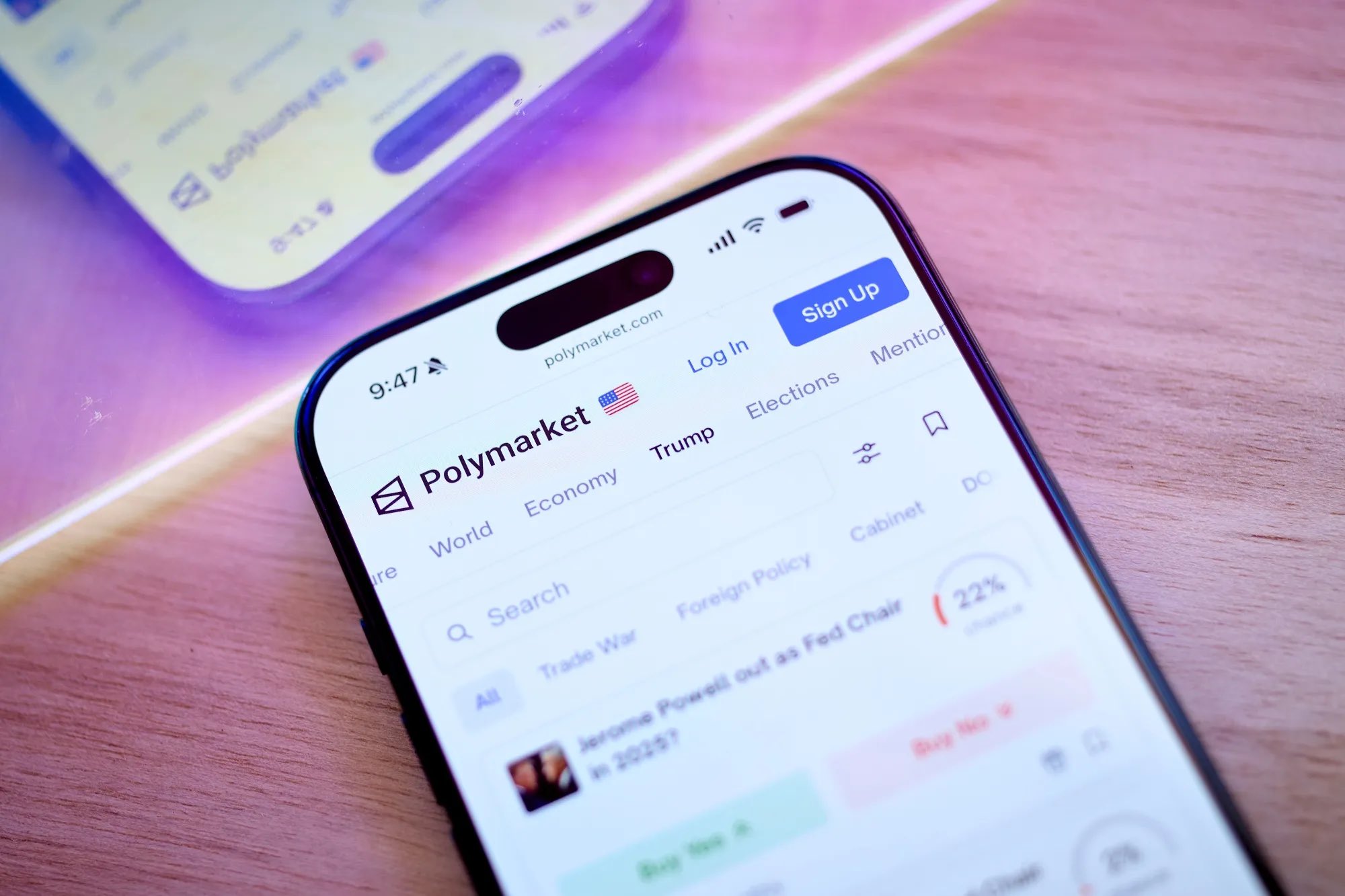
Preparing for the Polymarket Airdrop: A Step-by-Step Guide (2025–2026) Polymarket, the leading decentralized prediction market platform on Polygon, has confirmed plans to launch its native token $POLY with an associated airdrop for active users. This follows their recent U.S. relaunch preparations and a $2 billion funding round at a $9 billion valuation, positioning it as one of the most anticipated drops in crypto history potentially rivaling Uniswap’s $6.4 billion distribution in scale. The exact timeline points to Q1 2026, tied to full U.S. operations via their CFTC regulated exchange acquisition, but eligibility will likely be snapshotted based on pre-launch activity. No official criteria have been released yet, but based on Polymarket’s points system (gPOLY) and patterns from similar projects (e.g., Arbitrum, Optimism), rewards will prioritize genuine engagement over sybil farming. The key? Start now trading volume and consistency are your best bets for qualifying, with the top 20% of users potentially seeing the largest allocations. Aim for $100–$200 in total activity to hit basic thresholds, but scale up for better odds. Here’s how to get set up and maximize your chances without risking capital unnecessarily. 1. Set Up Your Account and WalletSign up on polymarket.com → create an account using email or social login (no KYC for most regions; U.S. beta live via QCX). Connect a Polygon-compatible wallet (MetaMask, Bitget Wallet, etc.). Your linked wallet will receive the $POLY airdrop. Pro tip: Keep ~$5–10 in MATIC for gas.Deposit USDC on Polygon ($50–$100 is plenty to start) via Polygon Bridge, Coinbase, or any major exchange.2. Build Activity Through TradingPlace real bets on Yes/No outcomes (elections, sports, crypto prices, pop culture). Even $10 trades count. gPOLY points are based on volume, trade count, and consistency. Higher volume ($500+) + weekly activity = higher rank. Track your stats: Search “Polymarket Trader Leaderboard” on Dune Analytics and paste your wallet address. Smart strategy: Bet on topics you actually understand, diversify across 5–10 markets, and never wash trade (Polymarket detects and disqualifies it).Only ~1.7% of users have traded >$50K — consistent $200–$1K volume already puts you in a strong mid-tier cohort. 3. Earn Community Badges & Extra VisibilityPost trade recaps, analysis, or strategies on X and tag @Polymarket many contributors have earned special badges that may boost allocations. Grow your audience by sharing real insights (users like @Graciee0x gained traction this way). Stay active in Discord and watch for referral campaigns or bonus tasks.4. Monitor Progress & Stay ReadyUse trackers like CryptoRank, DappRadar, or community dashboards to log tasks. Snapshot can happen anytime after full U.S. relaunch — stay glued to @Polymarket on X. Current market odds on Polymarket itself: “$POLY launch by Q1 2026” sits at ~67% (late Nov 2025).Risk note: Only bet money you can afford to lose. Wrong predictions = $0 per share; correct ones = $1. Potential Rewards & Final CaveatsA 10% TGE airdrop at $10B FDV = ~$1B total value distributed. Top traders could see 5–10x the base allocation. This is retroactive — farm ethically or risk blacklisting.Start trading smart today and you’re not just farming $POLY you’re actually profiting from the world’s most accurate prediction engine (Polymarket’s crowd beats traditional polls 70%+ of the time). DYOR and good luck! Details subject to change — always verify on Polymarket’s official channels.

- Nefu
- 28 Nov 2025
- Defi yield
How to Use NordVPN with Hyperliquid - Step by step guide
How to Use NordVPN with Hyperliquid – The Exact 5-Minute Setup I Run Before Every Perps Trade in 2025 I trade Hyperliquid full-time.I never open a position without first connecting to NordVPN. Hyperliquid is the fastest-growing on-chain perps venue on Arbitrum right now — 50x leverage, sub-second execution, zero gas on trades — but if you’re connecting with your raw home IP in late 2025, you’re getting throttled, geo-blocked in some regions, and leaking your location to anyone watching. This 5-minute routine fixes all of that forever. Why Hyperliquid Traders Need a VPN (It’s Literally Required in Some Places)Hyperliquid logs your real IP (even though it’s non-KYC) ISPs throttle WebSocket traffic → +200–500 ms latency spikes during pumps Certain countries / networks block Hyperliquid front-ends or Arbitrum RPCs outright Public WiFi + hot wallet = instant drain risk NordVPN = AES-256 encryption, audited no-logs, 8,400+ servers in 126 countries, true kill switch, Threat Protection ProLet’s lock it down. My Exact 5-Minute NordVPN → Hyperliquid Setup 1. Grab the Deal (60 seconds) → Get NordVPN with the current promo (3–4 months free)(Disclosure: affiliate link — using it keeps the blog free and gets you the lowest price) Take the 2-year plan — right now it’s usually ~$3.09–$3.99/month + 3–4 months free. 2. Install the App Download straight from your Nord account after payment — works on Windows, Mac, iOS, Android, and browser extensions. 3. Enable the Non-Negotiable Settings (15 seconds) Open NordVPN → Settings → turn ON:Kill Switch (system-level — kills internet if VPN drops) Threat Protection Pro (blocks phishing sites trying to steal your MetaMask seed) Auto-connect on startup4. Connect to the Fastest Hyperliquid-Optimized Server These are my personally tested servers (Nov 2025) — Hyperliquid runs on Arbitrum, so low-latency to US/EU is king:Your Region Best NordVPN Server Avg Ping to Hyperliquid NotesAsia / Australia Singapore #1000–#1200 45–55 ms Solid for ETH perps during Asia hoursEurope Frankfurt #800–#900 35–42 ms Lowest slippage on BTC/ETH pairsUnited States New York #600–#700 28–35 ms Best overall speed & liquidityRestricted Country Obfuscated Servers (any) +10 ms Hides that you’re using a VPNPro tip: Add a Dedicated IP (~$5/mo extra) if you hate “new location” warnings on exchanges. 5. Test & Start TradingVisit whatismyipaddress.com — should show your VPN server Open app.hyperliquid.xyz → connect MetaMask → place a tiny test position Watch the latency in the Hyperliquid UI — should stay under 50 ms even during chaosYou’re now completely invisible and untouchable. Bonus Stack for Maximum SecurityNordVPN (this guide) Ledger or Trezor hardware wallet MetaMask + hardware wallet integration Koinly for taxesDo this once and you’ll never trade naked again. Drop a comment if you want the same guide for Drift, Aster, GMX, or Bybit — already got them ready. Stay safe out there. — Nefu (@nefutrades)txchyon.com (When you’re ready to grab NordVPN, use my link again — it’s the cheapest you’ll ever see it and keeps these guides coming.)
- Nefu
- 27 Nov 2025
- Defi yield
How to setup Drift.trade with VPN – The Exact 5-Minute Setup I Run Before Every Perps Trade in 2025
How to Use NordVPN with Drift.trade – The Exact 5-Minute Setup I Run Before Every Perps Trade in 2025 I trade Drift full-time.I never open a position without first connecting to NordVPN. If you’re still hitting app.drift.trade with your raw home IP in late 2025, you’re leaking your location, getting throttled by your ISP during pumps, and making yourself an easy target on public WiFi. This 5-minute routine fixes all of that — forever. Why Drift Traders Need a VPN (No Cap)Drift logs your real IP (even though it’s on-chain) ISPs throttle WebSocket-heavy traffic → +200–500 ms latency spikes exactly when you need speed Certain countries / networks quietly block Drift, Phantom, or Solana RPCs Public WiFi + hot wallet = instant drain risk NordVPN = AES-256 encryption, audited no-logs, 7,200+ servers in 118 countries, true kill switch, Threat Protection ProLet’s lock it down. My Exact 5-Minute NordVPN → Drift Setup 1. Grab the Deal (60 seconds) → Get NordVPN with the current promo (3–4 months free)(Disclosure: affiliate link — using it keeps the blog free and gets you the lowest price) Take the 2-year plan — righhttps://refer-nordvpn.com/emkOgYiYuRSt now it’s usually ~$3.09–$3.99/month + 3–4 months free. 2. Install the App Download straight from your Nord account after payment — works on Windows, Mac, iOS, Android, and browser extensions. 3. Enable the Non-Negotiable Settings (15 seconds) Open NordVPN → Settings → turn ON:Kill Switch (system-level — kills internet if VPN drops) Threat Protection Pro (blocks phishing sites trying to steal your Phantom seed) Auto-connect on startup4. Connect to the Fastest Drift-Optimized Server These are my personally tested servers (Nov 2025):Your Region Best NordVPN Server Avg Ping to Drift NotesAsia / Australia Singapore #1000–#1200 38–45 ms Best for SOL memecoin perpsEurope Frankfurt #800–#900 42–48 ms Lowest slippage on BTC/ETH pairsUnited States New York #600–#700 44–52 ms Great for US session liquidityRestricted Country Obfuscated Servers (any) +10 ms Hides that you’re using a VPNPro tip: Add a Dedicated IP (~$5/mo extra) if you don’t want exchanges flagging “new location” logins every day. 5. Test & Start TradingVisit whatismyipaddress.com — should show your VPN server, not your real IP Open app.drift.trade → connect Phantom → place a tiny test position Watch the latency in the bottom-right of Drift — should stay under 60 ms even during pumpsYou’re now completely shielded. Bonus Stack for Maximum SecurityNordVPN (this guide) Ledger or Trezor hardware wallet Phantom with approval delays turned on Koinly for taxes (so you never have to KYC a CEX again)Do this once and you’ll never trade naked again. Drop a comment if you want the same guide for Hyperliquid, Aster, or GMX — already got them queued. Stay safe out there. — Nefu (@nefutrades)txchyon.com (When you’re ready to grab NordVPN, use my link again — it’s the cheapest you’ll ever see it and keeps these guides coming.)