
-
 Nefu
Nefu - 26 Dec 2025
- Portfolio management
The Advanced Guide to Tax-Loss Harvesting for Crypto Investors
Why Crypto Investors Often Miss Tax-Loss Opportunities Meet Lila. She’s been in crypto for 3 years. Her portfolio looked great — until tax season hit.A giant bill landed, and much of it could have been avoided. She realized she had been ignoring unrealized losses, leaving capital on the table and disrupting portfolio efficiency. That’s when she discovered tax-loss harvesting — a systematic way to capture losses, reduce taxes, and reinvest for growth.What Is Tax-Loss Harvesting? At its core, tax-loss harvesting is:Selling underperforming assets to realize losses, offset gains, and improve tax efficiency.Key benefits:Reduce taxable income Free up capital for reinvestment Maintain long-term portfolio strategyIt works hand-in-hand with allocation and rebalancing strategies, rather than against them.Learn foundational allocation strategies here:Crypto Portfolio Allocation for BeginnersThe Basics: How to Harvest LossesIdentify assets with unrealized losses Sell to realize losses Offset gains elsewhere in your portfolio Reinvest strategically while maintaining target allocationsEven simple quarterly reviews can make a massive difference.Lila now schedules quarterly tax-loss harvesting sessions, smoothing her tax burden year-round instead of panicking in December.Multi-Chain Challenges As crypto expands across multiple chains, harvesting becomes trickier:Transfers across chains can trigger taxable events Liquidity varies between chains Tracking losses requires careful monitoringBest practices:Consolidate tracking across all chains Prioritize assets with the largest unrealized losses Follow tax rules to avoid wash-sale pitfalls Reinvest strategically to maintain allocationMulti-chain portfolios need discipline, but the benefits are significant for diversified investors.Deep dive:Multi-Chain Portfolio AllocationIntegrating Tax-Loss Harvesting with Rebalancing Tax-loss harvesting and rebalancing can be perfect partners:Maintain your target allocations Capture tax benefits without disrupting strategy Streamline portfolio managementHow to integrate:Review allocations during your harvest Adjust trades to maintain targets Track both realized and unrealized gains Reinvest efficiently across assetsThis approach turns a reactive tax exercise into a strategic portfolio optimization tool.Related reading:How to Rebalance a Crypto PortfolioAdvanced Techniques for Seasoned Investors Once you master the basics, consider advanced strategies:Derivatives – use futures or options to realize losses without selling core positions Strategic Timing – harvest losses during high-volatility periods for maximum efficiency Cross-Asset Harvesting – offset gains in correlated assets for better tax efficiencyThese methods are most suitable for professional or high-net-worth investors, but even retail investors can learn from the principles.Connects to hedging strategies:Hedging a Crypto PortfolioYear-Round vs Year-End HarvestingYear-End Only: reactive, often stressful, can miss opportunities Year-Round: proactive, smooths taxes, and aligns with market volatilityLila now treats tax-loss harvesting as part of her investment rhythm, not just a December chore.Final Thoughts Tax-loss harvesting is more than a tax trick. It’s a portfolio management tool. When combined with allocation, rebalancing, and risk monitoring, it:Improves tax efficiency Preserves long-term growth Reduces portfolio stress Strengthens disciplined investing habitsFor crypto investors, mastering tax-loss harvesting can turn chaotic gains into a structured, optimized portfolio — and Lila’s tax bill finally became something to celebrate.

- Nefu
- 26 Dec 2025
- Regulatory tax
Comprehensive Guide to Global Crypto Regulations
📘 Comprehensive Guide to Global Crypto Regulations📌 Introduction — Understanding Global Crypto Regulations As cryptocurrency adoption grows, so does the complexity of legal frameworks surrounding it. Crypto investors, traders, and businesses must understand how different jurisdictions regulate digital assets to remain compliant and avoid penalties. Global regulations cover a wide range of topics: Licensing and registration requirements for exchanges and service providers Anti-Money-Laundering (AML) and Know Your Customer (KYC) rules Tax obligations linked to trading, staking, and income Cross-border compliance challenges for international transactionsThis guide is an evergreen roadmap for:✔ Understanding country-specific crypto regulations✔ Staying compliant with AML/KYC standards✔ Using international compliance tools✔ Preparing for audits and reporting obligations✔ Interlinking with deeper subcategory guides like crypto-tax-reporting-software and crypto-compliance-tools 🧭 Section 1: How Different Countries Regulate Cryptocurrency 🔹 United States — Property Classification and Exchange Oversight The U.S. classifies cryptocurrency as property for tax purposes, which affects capital gains reporting. Other regulatory considerations include: SEC oversight: Security tokens and investment offerings may fall under securities law. FinCEN compliance: Crypto service providers must adhere to AML rules and report suspicious activity. State licensing: Money transmitter licenses are often required for exchanges operating in multiple states.Exchanges frequently report transactions to the IRS using 1099 forms, and professional traders often rely on tools like crypto-tax-reporting-software to stay compliant.🔹 European Union — MiCA and VAT Considerations The EU is working on harmonized crypto rules under the Markets in Crypto-Assets (MiCA) framework. Key points include: Exchange licensing required for service providers across member states AML/KYC regulations integrated into all crypto operations VAT exemptions for certain crypto transactions Investor protections for retail participantsThese regulations make international compliance software valuable for businesses operating in multiple European countries.🔹 United Kingdom — FCA Supervision The UK Financial Conduct Authority (FCA) regulates crypto firms through: Registration and licensing for exchanges and custodians AML/KYC compliance reporting Consumer protection guidance for retail investorsUK crypto businesses must integrate strong compliance processes and maintain detailed records for potential audits. Tools like crypto-compliance-tools are often essential.🔹 Asia-Pacific — Diverse Approaches Different countries in Asia and Oceania adopt varied regulatory frameworks: Singapore: Capital gains are generally non-taxable, but AML/KYC rules apply to all exchanges. Japan: Crypto is treated as taxable income, with strict reporting and licensing for exchanges. Australia: The ATO treats crypto as property; businesses must report gains and maintain records.Cross-border operations in the region require careful monitoring of local regulations and compliance standards.🔹 Section 2: Core Compliance Requirements Global crypto regulations share several recurring compliance themes: 1. AML (Anti-Money-Laundering) Crypto businesses must implement systems to detect and report suspicious activities, including: Monitoring large transactions and transfers Reporting suspicious activity to local authorities Keeping detailed records for audit purposesSolutions like Chainalysis and Elliptic simplify AML compliance for exchanges and institutional investors.2. KYC (Know Your Customer) All crypto service providers are typically required to verify customer identities to prevent fraud and money laundering: Collecting government-issued ID and personal information Screening against sanctions lists Maintaining secure, auditable recordsKYC compliance tools like SumSub and Onfido are widely adopted to meet regulatory requirements.3. Licensing and Registration Different jurisdictions require crypto service providers to obtain licenses: Money transmitter licenses in the U.S. Crypto exchange licenses in Europe under MiCA National registrations in Asia-Pacific countriesStaying updated with license requirements ensures legal operation and prevents fines or closures.4. Tax Reporting Obligations While tax specifics vary, nearly all jurisdictions expect crypto users to report: Gains from trading, swapping, and spending crypto Staking or mining income Airdrops and token rewardsAutomated tools like crypto-tax-reporting-software can track these events across multiple wallets and exchanges.🧩 Section 3: Cross-Border and International Compliance Operating internationally introduces additional challenges: Jurisdictional conflicts: Different countries may classify crypto differently (property, currency, security). Transaction monitoring: Cross-border transfers may trigger reporting under AML rules. Data privacy: Ensure KYC data handling complies with local privacy laws (e.g., GDPR in the EU).International crypto businesses often rely on compliance platforms and audits to maintain transparency and legality.🏦 Section 4: Tools and Resources for Global Compliance 🔹 Compliance PlatformsChainalysis — transaction monitoring and risk analysis Elliptic — blockchain analytics and AML compliance Onfido / SumSub — KYC verification solutions🔹 Tax and Reporting Toolscrypto-tax-reporting-software — automates cross-border reporting Integration with accounting software ensures audit-ready reports🔹 Interlinking with Subcategory Guides For deeper dives into related topics: Crypto Entity Formation Crypto Banking Solutions Audit & Accounting Practices📌 Conclusion — Navigating Global Crypto Regulations Global cryptocurrency regulations are complex but critical for compliance: Understand licensing, AML/KYC, and reporting obligations in your jurisdiction Use international compliance tools to manage risk efficiently Maintain thorough records for audits and cross-border operations Interlink with tax, banking, entity formation, and audit guidance to create a complete compliance workflowStaying informed and leveraging technology ensures your crypto operations are legally compliant and audit-ready.
- Nefu
- 26 Dec 2025
- Getting started
How to Set Up Xverse Wallet: Step-by-Step Tutorial for Beginners
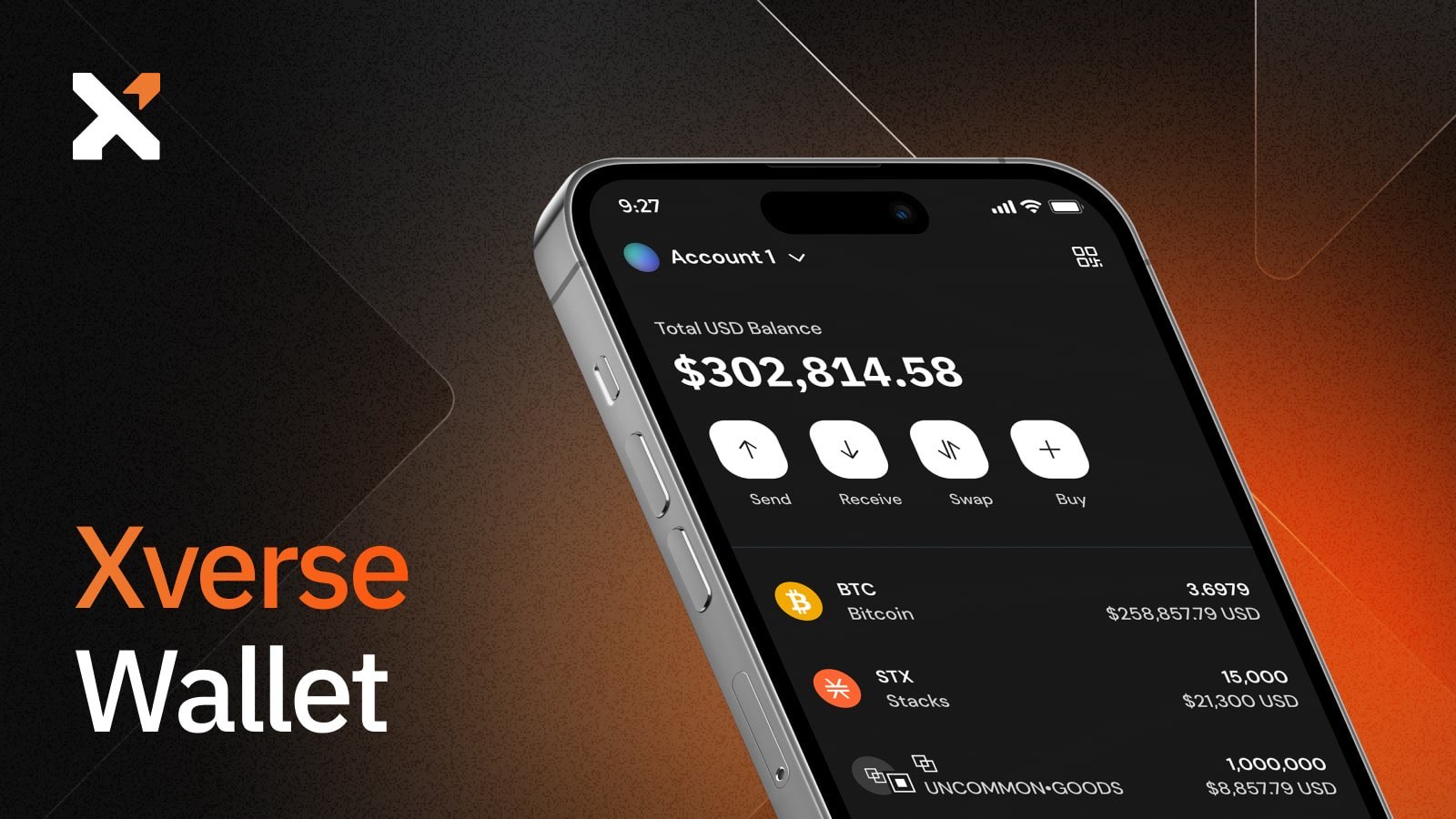
Xverse is one of the most popular non-custodial Bitcoin wallets in 2026, especially for beginners who want to explore beyond basic Bitcoin holding. It supports native Bitcoin (BTC), Ordinals inscriptions, Runes, BRC-20 tokens, Rare Sats, and Bitcoin Layer-2 ecosystems like Stacks (STX), Starknet, Spark, Mezo, and Bitlayer. What sets Xverse apart is its beginner-friendly interface combined with advanced features: you can buy BTC directly in the app, swap assets, connect to Bitcoin DeFi apps, mint NFTs, and even integrate with hardware wallets like Ledger for extra security. It's available as a mobile app (iOS and Android) and Chrome browser extension, making it versatile for daily use. As a self-custodial wallet, you control your private keys—no one else can access your funds. This aligns perfectly with the core principles outlined in What is Cryptocurrency? A Complete Beginner's Guide to Blockchain in 2026. In this guide, we'll walk you through setting up Xverse from scratch, backing up your recovery phrase, and getting ready to receive your first Bitcoin. We'll also cover importing an existing wallet and basic security best practices to avoid the 10 Biggest Crypto Mistakes Beginners Make in 2026. Why Choose Xverse as Your Bitcoin Wallet? Before diving into the setup, here's why many beginners prefer Xverse over other options:Full Bitcoin Web3 Support: Unlike basic wallets, Xverse lets you manage Ordinals (Bitcoin NFTs), Runes protocols, and Rare Satoshis without risking accidental spends. Layer-2 Integration: Seamlessly handle Stacks (STX) for staking rewards, plus emerging chains like Starknet and Spark. Built-in Buying and Swapping: Purchase BTC directly or swap between assets—no need to leave the app. Hardware Wallet Compatibility: Connect Ledger or Keystone for cold storage while keeping the user-friendly Xverse interface. Free and Open-Source Elements: No subscription fees, and parts of the code are transparent for community trust.For a broader comparison of beginner-friendly wallets, check out Best Crypto Wallets for Beginners in 2026: Top Picks and Reviews. Prerequisites Before Setting Up XverseA smartphone (iOS or Android) or computer with Chrome browser. A secure, private location to write down your recovery phrase. Never share your seed phrase or password with anyone—this is the key to avoiding common scams.Step-by-Step Guide to Setting Up Xverse Wallet Follow these steps carefully. The process takes less than 5 minutes. Step 1: Download Xverse from Official Sources Always download from official links to avoid fake apps:Mobile (Recommended for Beginners): iOS: App Store – Search "Xverse: Bitcoin Crypto Wallet" or visit https://apps.apple.com/app/xverse-bitcoin-crypto-wallet/id1552272513 Android: Google Play Store – Search "Xverse Wallet" or visit the official site.Browser Extension (Great for Desktop DeFi and Ordinals): Visit https://www.xverse.app/download and click the Chrome option, or go directly to the Chrome Web Store.Warning: Only use https://www.xverse.app as your source. Fake sites can steal your funds. Step 2: Install and Open the AppInstall the app or extension. Open Xverse. You'll see the welcome screen with two options: Create New Wallet or Restore Wallet.Step 3: Create a New WalletSelect Create New Wallet. The app will generate a 12-word secret recovery phrase (also called seed phrase). Write it down exactly in order on paper. Do not screenshot or store digitally. Confirm the phrase by re-entering the words in the correct order.This phrase is your master backup. If you lose your device, you can restore everything with it. Store it offline in a safe place—losing it means permanent loss of funds. For more on seed phrase security, see our guide on How to Transfer Crypto from Exchange to Wallet Safely in 2026. Step 4: Set Up SecurityCreate a strong password (or PIN on mobile). Enable biometric login (Face ID or fingerprint) for convenience. On mobile, you can also enable additional app lock features.Xverse encrypts everything on your device—no data is sent to servers. Step 5: Explore Your New WalletYour dashboard will show separate accounts for Bitcoin (Native Segwit and Taproot addresses) and Stacks/Ordinals. Tap Receive to view your Bitcoin address (starts with bc1q for Segwit or bc1p for Taproot). Use Native Segwit (bc1q) for regular BTC transfers to avoid higher fees.Xverse automatically separates addresses: Taproot for Ordinals/Runes to prevent accidental spending of inscribed sats. Step 6: Fund Your Wallet (Optional but Recommended) To test everything:Buy BTC directly: Tap Buy and follow the on-ramp (partners like MoonPay or others based on your location). Or transfer from an exchange: Use your Xverse receive address.New to buying? Follow How to Buy Bitcoin for Beginners: Complete Step-by-Step Guide 2026 or How to Buy Crypto with Credit Card or PayPal in 2026. Once funded, practice sending a small amount to another address or back to an exchange. Importing an Existing Wallet into Xverse If you already have a Bitcoin or Stacks wallet (e.g., from Unisat, Leather, Phantom, OKX, or Magic Eden):Choose Restore Wallet on the welcome screen. Select your previous wallet provider (Xverse makes this easy with guided import). Enter your 12/24-word seed phrase. Xverse auto-detects the correct paths and imports balances, Ordinals, and assets.This is useful if you're switching from another wallet mentioned in our other tutorials, like How to Set Up MetaMask Wallet: Step-by-Step Tutorial for Beginners 2026. Advanced Features for Beginners to Explore Later Once set up:Connect to dApps: Browse Bitcoin marketplaces like Magic Eden for Ordinals. Stack STX: Earn Bitcoin rewards (similar to Dollar Cost Averaging Explained: The Best Strategy for Crypto Beginners in 2026). Hardware Integration: Add Ledger support via the browser extension for cold storage. Lightning Payments: Use integrated Lightning for fast, cheap transactions.Common Issues and TroubleshootingInvalid Seed Phrase: Double-check spelling and order. No Balance Showing: Wait for sync or refresh—Ordinals can take time to index. High Fees: Use Native Segwit addresses for regular transfers. Always update to the latest version for security fixes.If issues persist, visit the official support at https://support.xverse.app. Final Security TipsNever enter your seed phrase on any website or app except during restore. Enable 2FA on linked exchanges. Practice with small amounts first. Master your mindset to avoid FOMO-driven mistakes—read Crypto Investing Psychology: Mastering Emotions and Avoiding FOMO as a Beginner in 2026.Xverse makes entering the Bitcoin ecosystem straightforward and secure. Once set up, you're ready to safely buy, hold, and explore assets like Bitcoin and Ethereum (see Bitcoin vs Ethereum: Which is Better for Beginners in 2026 and Top 10 Cryptocurrencies Explained for Absolute Beginners in 2026). Happy stacking—and welcome to self-custody!

- Nefu
- 25 Dec 2025
- Portfolio management
Advanced Crypto Estate Planning: Protecting Your Digital Legacy
The Wake-Up Call: A Crypto Inheritance Gone Wrong Imagine Sarah’s uncle, a crypto investor, passes away suddenly. He left behind a portfolio worth millions, but no one knew the passwords or where the keys were stored. Weeks turned into months of legal confusion and lost assets — a nightmare Sarah never wants to face. This scenario is more common than people realize and highlights a major gap in crypto risk management.Related: Crypto Portfolio Risk Management ExplainedWhy Crypto Estate Planning Matters Meet Alex, a long-term crypto investor who spent a decade building serious wealth. One morning, it hit him: if something happened today, his family would be locked out forever. Crypto estate planning prevents that outcome by ensuring:Digital assets are protected for heirs Ownership transfers smoothly and legally Private keys and wallets are never lost or mishandledThis is the natural next step after learning how to manage and protect a crypto portfolio.Builds on: Introduction to Crypto Estate PlanningStep 1: Create a Digital Asset Inventory A digital asset inventory is the foundation of every crypto estate plan. Without it, heirs are guessing — and guessing loses money. Your inventory should include:Wallet addresses and balances Private keys and seed phrases Exchange accounts and recovery methods NFTs, DeFi positions, and smart contractsHow to build it properly:List every wallet, exchange, and chain Record balances and asset types Store access credentials offline Review and update quarterlyAlex learned the hard way that undocumented wallets can disappear forever. Now, his inventory is updated alongside his portfolio rebalancing routine.See also: Creating a Digital Asset InventoryStep 2: Secure Storage of Crypto Keys An inventory is useless if keys are lost, stolen, or compromised. Best practices include:Hardware wallets for cold storage Redundant backups in secure locations Multi-signature wallets for large balances Zero cloud storage for raw seed phrasesAlex once saved an encrypted backup online “just temporarily.” That moment scared him into upgrading his setup to multi-signature cold storage, similar to professional custody standards.Deep dive: Secure Storage of Crypto KeysStep 3: Writing a Crypto Will A crypto will bridges the gap between blockchain ownership and real-world law. A proper crypto will should:Reference your digital asset inventory Name beneficiaries clearly Explain how access is granted (without exposing keys directly) Be reviewed by a lawyer familiar with digital assetsAlex created a crypto-specific will alongside his traditional one, ensuring courts wouldn’t freeze or misinterpret his assets.Next step: Writing a Crypto WillStep 4: Using Trusts for Crypto Assets Trusts unlock advanced control over how crypto is managed and distributed. Why trusts matter:Avoid probate delays Protect assets from disputes Enable structured, conditional inheritanceHow to use them effectively:Choose revocable vs. irrevocable Assign a crypto-aware trustee Transfer assets properly Document secure access methodsAlex watched two inheritances unfold — one with a trust and one without. Only one transferred smoothly.Related guide: Using Trusts for Crypto AssetsStep 5: Planning for Multi-Generational Crypto Wealth Crypto doesn’t have to end with one generation. Smart strategies include:Multi-signature wallets with layered access Staggered inheritance schedules Tax-aware distributions Education for heirs on security and volatilityAlex now treats education as part of the inheritance — teaching wallets, security, and risk before handing over keys.Continue reading: Planning for Multi-Generational Crypto WealthCommon Mistakes and How to Avoid Them Most crypto estate failures come from avoidable mistakes:No inventory Lost or inaccessible keys No legal documentation Assumptions that heirs “will figure it out”Avoid them by:Maintaining updated records Using hardened key storage Drafting crypto-specific legal documents Stress-testing your plan annuallyAlex learned from a friend who lost an entire NFT collection due to missing seed phrases — a mistake he vowed never to repeat.Avoid pitfalls: Common Mistakes in Crypto Estate PlanningFinal Thoughts Advanced crypto estate planning turns digital wealth into a lasting legacy, not a technical liability. By combining:Digital asset inventories Secure key management Crypto wills Trusts and generational planningYou ensure your portfolio survives market cycles, legal systems, and the unexpected. Alex sleeps better knowing his crypto isn’t just valuable — it’s prepared.

- Nefu
- 25 Dec 2025
- Portfolio management
Algorithmic Portfolio Rebalancing for Crypto
What Is Algorithmic Rebalancing? Algorithmic rebalancing uses predefined rules or scripts to automatically adjust a crypto portfolio’s allocations. Instead of manually buying or selling assets, the system can:Trigger trades when allocations drift from targets Maintain desired exposure across asset classes Integrate with APIs, trading bots, or portfolio management toolsStory: Jamie, a Solana-focused investor, used to rebalance manually each month. Market swings caused him to overreact, selling winners too early and holding losers too long. After switching to algorithmic rebalancing, trades now execute automatically, keeping his allocations steady without emotional decisions.Start with: How to Rebalance a Crypto PortfolioWhy Algorithmic Rebalancing Matters Manual rebalancing can be:Time-consuming for portfolios with dozens of assets Emotionally taxing, leading to inconsistent decisions Prone to missed opportunities in volatile marketsAlgorithmic strategies remove these hurdles. For example, you can:Automatically rebalance when a coin exceeds a 5% deviation from its target Adjust allocations based on market volatility or momentum signals Coordinate rebalancing with tax-loss harvesting: Tax-Loss Harvesting Basics for CryptoRelated reading: Crypto Portfolio Risk Management ExplainedKey Benefits of Algorithmic RebalancingReduces emotional bias – no panic selling during dips Saves time – especially for multi-asset or multi-chain portfolios Maintains discipline – ensures allocations remain aligned with your strategy Improves risk-adjusted returns – systematic rebalancing reduces volatilityExample: Maria manages a 15-coin portfolio across Ethereum, Solana, and Avalanche. Manual rebalancing took hours each week, often missing small drifts. Algorithmic triggers now handle adjustments instantly, improving both efficiency and mental bandwidth.Implementation StepsDefine target allocations – e.g., BTC 40%, ETH 30%, Altcoins 20%, Stablecoins 10% (Crypto Portfolio Allocation for Beginners) Set trigger rules – ±5% allocation drift, volatility thresholds, or momentum signals (Dynamic Allocation Strategies for Active Traders) Automate execution – via API, trading bots, or portfolio management platforms (Automated Rebalancing Tools and Strategies) Monitor performance – track metrics like realized/unrealized gains, Sharpe ratio, and risk-adjusted returns (How to Track Crypto Portfolio Performance)Tip: Combine algorithmic rebalancing with multi-chain tracking and tax-loss harvesting: Integrating Tax-Loss Harvesting with RebalancingAdvanced ConsiderationsAPI Security: Always use secure API keys with read/write limits Fees and Slippage: Frequent rebalancing can incur costs; optimize thresholds Tax Optimization: Coordinate rebalancing with tax-loss harvesting strategies (Strategic Tax-Loss Harvesting Throughout the Year)Story: Alex automated his portfolio and coordinated rebalancing with tax-loss harvesting. This kept his allocations steady while saving thousands in taxes each year.Final Thoughts Algorithmic rebalancing is ideal for investors seeking systematic, disciplined, and stress-free portfolio management. By automating allocation adjustments, you:Protect gains without overtrading Maintain target exposures across assets and chains Free up time to focus on strategy, market research, or peace of mindStart small, test your rules, and scale gradually. Like Jamie and Maria, your portfolio can run efficiently while you maximize returns and minimize stress.

- Nefu
- 25 Dec 2025
- Portfolio management
Crypto Estate Planning Basics (Secure Your Digital Assets)
What Is Crypto Estate Planning? Crypto estate planning is the practice of ensuring your digital assets can be securely passed to heirs or beneficiaries in case of death, incapacity, or unforeseen circumstances. Unlike traditional assets, crypto is fully digital, irreversible, and often inaccessible without the correct private keys or recovery methods. Without proper planning, access to your crypto can be lost forever, potentially leaving heirs with nothing despite your careful portfolio management.Estate planning is the final layer of portfolio management, securing both wealth and legacy. Think of it as the safety net that ensures everything you’ve built continues to provide value to your beneficiaries.If you’re new to portfolio basics, start here:👉 Crypto Portfolio Allocation for Beginners (Simple, Low-Risk Framework)Why Crypto Estate Planning Matters Crypto is digital, borderless, and irreversible. Mistakes are permanent and often unfixable. Common pitfalls include: Losing private keys or seed phrases Forgetting wallet addresses No clear instructions on inheritance Leaving assets solely on exchangesProper estate planning ensures that: Heirs can access and control inherited assets securely Legal disputes over crypto are minimized Wealth is preserved efficiently, even in volatile markets Tax obligations for beneficiaries are anticipated and managedWithout an estate plan, even a carefully managed portfolio can fail to deliver to the next generation.Related: Crypto Portfolio Risk Management ExplainedCore Components of Crypto Estate Planning A robust crypto estate plan should include multiple layers of security, clarity, and legal compliance. 1️⃣ Wills and Legal InstructionsDocument all assets and ownership clearly Specify beneficiaries for each asset type (BTC, ETH, altcoins, stablecoins) Include explicit instructions for accessing wallets and exchanges Work with an attorney familiar with digital assets to ensure enforceabilityGuide: Writing a Crypto Will2️⃣ Multi-Signature WalletsRequire multiple parties (trusted family or advisors) to authorize transactions Reduces risk of losing access due to a single compromised key Provides an extra layer of security for significant holdingsRelated: Secure Storage of Crypto Keys3️⃣ Trusts for Digital AssetsCan hold crypto for beneficiaries according to your instructions Avoids probate delays and potential legal complications Enhances privacy and control over inheritance Useful for both small and large portfoliosMore info: Using Trusts for Crypto Assets4️⃣ Secure Key ManagementUse hardware wallets and cold storage to prevent hacks Store backup seed phrases in secure, geographically separated locations Consider splitting access among trusted individuals to mitigate riskLearn more: Creating a Digital Asset Inventory5️⃣ Documentation and CommunicationMaintain a detailed inventory of all crypto assets, wallets, and accounts Communicate with heirs in advance to ensure they understand access and responsibilities Consider writing step-by-step instructions for non-technical beneficiariesContinue: Planning for Multi-Generational Crypto WealthHow Estate Planning Ties Into Portfolio Management Estate planning is not standalone; it complements all other aspects of portfolio management:Allocation: Ensure heirs inherit proportional shares of BTC, ETH, altcoins, and stablecoins (Crypto Portfolio Allocation) Risk Management: Secure wallets, backups, and multi-sig arrangements reduce permanent loss (Crypto Portfolio Risk Management Explained) Performance Tracking: Maintain a clear record of holdings, purchase prices, and cost basis for beneficiaries (Tracking Crypto Portfolio Performance) Tax Planning: Prepare for potential inheritance taxes or capital gains that may apply to heirs (Tax-Loss Harvesting Basics for Crypto)Understanding your full portfolio ensures estate planning is practical, effective, and aligned with long-term goals.Step-by-Step: Setting Up a Crypto Estate PlanInventory All AssetsInclude exchanges, wallets, staking accounts, DeFi positions, and NFT holdings (Creating a Digital Asset Inventory).Choose Secure Access MethodsDecide between multi-signature wallets, hardware wallets, cold storage, and encrypted digital vaults (Secure Storage of Crypto Keys).Draft Legal InstructionsWork with a qualified attorney to formalize wills, trusts, and contingency plans (Writing a Crypto Will).Communicate With Trusted IndividualsEnsure heirs or executors know how to access assets, maintain security, and follow legal instructions (Planning for Multi-Generational Crypto Wealth).Plan for Taxes and ComplianceUnderstand local regulations on crypto inheritance to prevent unnecessary penalties (Crypto Tax-Loss Harvesting Explained).Review and Update RegularlyReassess annually or after significant portfolio changes, such as new assets or updated regulations.Common Estate Planning Mistakes ❌ Leaving crypto solely on an exchange without backups❌ Failing to document private keys or seed phrases❌ Ignoring instructions for heirs unfamiliar with crypto❌ Forgetting to update the plan after acquisitions or portfolio changes❌ Neglecting potential inheritance taxes or legal compliance A proper plan mitigates these risks and ensures your legacy is secure.Avoid pitfalls: Common Mistakes in Crypto Estate PlanningFinal Thoughts Crypto estate planning completes the Portfolio Management system. It’s not just about passing on wealth — it’s about preserving access, minimizing risk, and securing your legacy. When allocation, rebalancing, risk management, performance tracking, and tax-loss harvesting are in place, estate planning ensures your strategy endures beyond your lifetime, giving peace of mind that your heirs will benefit from your careful planning.Start your journey here: Introduction to Crypto Estate Planning

- Nefu
- 25 Dec 2025
- Portfolio management
Crypto Portfolio Allocation for Beginners (Simple, Low-Risk Framework)
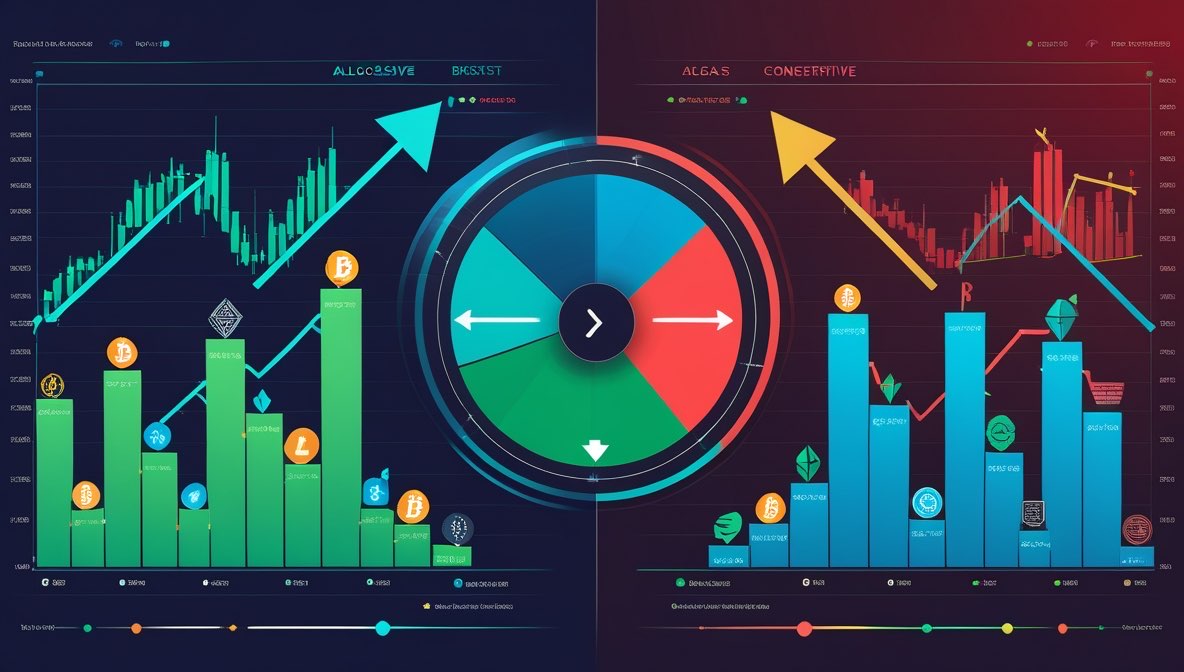
What Is Crypto Portfolio Allocation? Crypto portfolio allocation is the process of deciding how much capital to put into each type of crypto asset, such as Bitcoin, Ethereum, altcoins, and stablecoins. The goal is simple:Maximize upside while limiting downside. Instead of betting everything on one coin, allocation spreads risk across different assets with different risk profiles, laying the foundation for risk management, rebalancing, and performance tracking. For a deeper dive into building a longer-term allocation, see How to Build a Long-Term Bitcoin-Ethereum-Altcoin Portfolio.Why Portfolio Allocation Matters in Crypto Crypto is highly volatile. Poor allocation is the #1 reason beginners:Panic sell during market drops Overexpose themselves to high-risk altcoins Miss long-term gainsA proper allocation helps you:Survive market drawdowns (Understanding Crypto Drawdowns and Volatility) Stay invested longer Rebalance strategically instead of reacting emotionally (How to Rebalance a Crypto Portfolio)Think of allocation as your risk control system — without it, all other portfolio strategies become unstable.The Four Core Crypto Asset Buckets Every crypto portfolio can be broken into four main buckets: 1. Bitcoin (BTC)Lowest relative risk Market leader Long-term store of value narrative2. Ethereum (ETH)Smart contract base layer Supports DeFi, NFTs, L2 scaling solutions Higher growth than BTC, with more risk3. AltcoinsHighest upside potential Highest volatility Includes Solana, AI coins, DeFi tokens, memes (Diversifying Into Emerging Layer-1 Tokens)4. StablecoinsCapital preservation Dry powder for buying dips Yield opportunities through lending or stakingFor more on managing risk within these buckets, see Crypto Portfolio Risk Management Explained and Using Stop-Loss and Take-Profit in Crypto Portfolios.Simple Crypto Portfolio Allocation Framework Here’s a starter framework for beginners who want growth without extreme risk: Conservative Allocation50% Bitcoin 25% Ethereum 15% Altcoins 10% StablecoinsBalanced Allocation40% Bitcoin 30% Ethereum 20% Altcoins 10% StablecoinsAggressive Allocation30% Bitcoin 30% Ethereum 35% Altcoins 5% Stablecoins💡 Tip: If unsure, start with the balanced allocation and adjust as you gain experience. For more guidance on low-risk vs high-risk frameworks, see Low-Risk vs High-Risk Crypto Allocation Frameworks.Adjusting Allocation Based on Risk Tolerance Ask yourself:Can I handle a 40–60% drawdown emotionally? (Understanding Crypto Drawdowns and Volatility) Do I have income outside crypto? Am I investing short-term or long-term?Lower risk tolerance → more BTC and stablecoinsHigher risk tolerance → more altcoins No allocation is perfect — only the one you can stick with. Once you have your allocation, learn how to rebalance your portfolio: Rebalancing Without Selling Your Core Assets Automated Rebalancing Tools and Strategies Rebalancing During High-Volatility Periods Dynamic Allocation Strategies for Active TradersCommon Portfolio Allocation Mistakes Avoid these beginner traps: ❌ Going 100% into altcoins❌ Chasing recent pumps❌ Ignoring stablecoins❌ Never rebalancing❌ Over-diversifying into dozens of coins Allocation should be intentional, not reactive. Learn to track performance and avoid mistakes with: Tracking Unrealized vs Realized Gains Benchmarking Crypto Portfolio Performance Risk-Adjusted Returns: Sharpe, Sortino, and More Using Dashboards and Spreadsheets for CryptoHow Allocation Fits Into a Complete Portfolio Strategy Allocation is the foundation of:Risk Management: Protect your capital and control drawdowns (Hedging Strategies for Crypto Investors, Protecting Your Portfolio Against Black Swan Events) Rebalancing: Keep allocations aligned with targets (all rebalancing links above) Performance Tracking: Benchmark returns, track realized/unrealized gains, and calculate risk-adjusted returns (all performance tracking links above) Tax Efficiency: Offset gains through losses strategically (Tax-Loss Harvesting Basics for Crypto, Strategic Tax-Loss Harvesting Throughout the Year, Tax-Loss Harvesting with Multi-Chain Assets, Integrating Tax-Loss Harvesting with Rebalancing, Advanced Tax-Loss Harvesting Techniques) Estate Planning: Secure assets for heirs and create crypto wills or trusts (Introduction to Crypto Estate Planning, Creating a Digital Asset Inventory, Secure Storage of Crypto Keys, Writing a Crypto Will, Using Trusts for Crypto Assets, Planning for Multi-Generational Crypto Wealth, Common Mistakes in Crypto Estate Planning)Without allocation, everything else in your portfolio strategy becomes reactive rather than proactive.Next Steps: Build a Complete Portfolio Management Roadmap After mastering allocation, continue your learning path by exploring all aspects of portfolio management through the linked articles above. Each subcategory — Rebalancing, Risk Management, Performance Tracking, Tax-Loss Harvesting, Estate Planning — is fully covered in the series to help you grow, protect, and optimize your crypto portfolio.